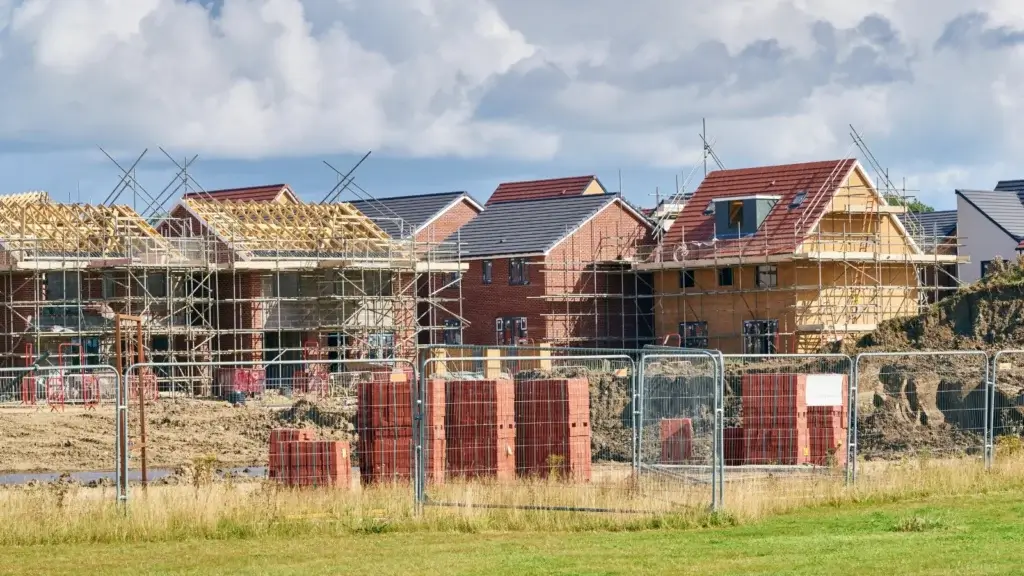
Through collaboration, housebuilders of all sizes can meet the demands of the Future Homes Standard. Gill Oliver looks at how the industry and its supply chain are coming together.
If you had to sum up the future of homebuilding in one word, it would have to be ‘collaboration’. To meet the gargantuan challenges of the transition to the Future Homes Standard and the government’s target to build 1.5 million homes during this parliament, the industry is going large with a ‘better together’ vibe.
Sharing of research, knowledge, practical outcomes and insights is happening on a scale never seen before, and all the indications are that this is just the beginning.
It’s three years since the Future Homes Hub was created and it’s come a long way in terms of creating partnerships and forging connections with industry, government, the supply chain and the finance world. The Hub works with homebuilders of all sizes and, supported by the Carbon Trust, it has produced the first sector-wide net zero transition plan for new homes.
As Hub chairman and Barratt Redrow chief executive David Thomas points out: “Working together, we’ve made significant progress.”
The power of combining forces is also highlighted by Mark White, managing director of Bargate Homes and chair of the Future Homes Hub’s SME liaison group: “To make real headway with the roll-out of green technology, we must work together more effectively as a collective – for the sake of the customer.”
SMEs, although vital to delivery and innovation, often struggle with capacity, cashflow and compliance, and White’s job is to take these obstacles to the FHH team and try to alleviate them by tapping into that pool of expertise, resources and buying power. He believes this will enable thousands more homes to be delivered on sites largely overlooked by the PLCs.
Speaking of sites and land, planning is finally having a moment as the government zooms in on the potential of well-resourced and strategic planning in tackling the chronic housing shortage.
“It’s really important that we work across the disciplines and professions to ensure that we’re planning for the right homes in the right places with the right technology, so that we can not only mitigate against these environmental challenges, we’re also helping to improve the overall situation,” says Dr Victoria Hills, chief executive of the Royal Town Planning Institute. “It all starts with the plan.”
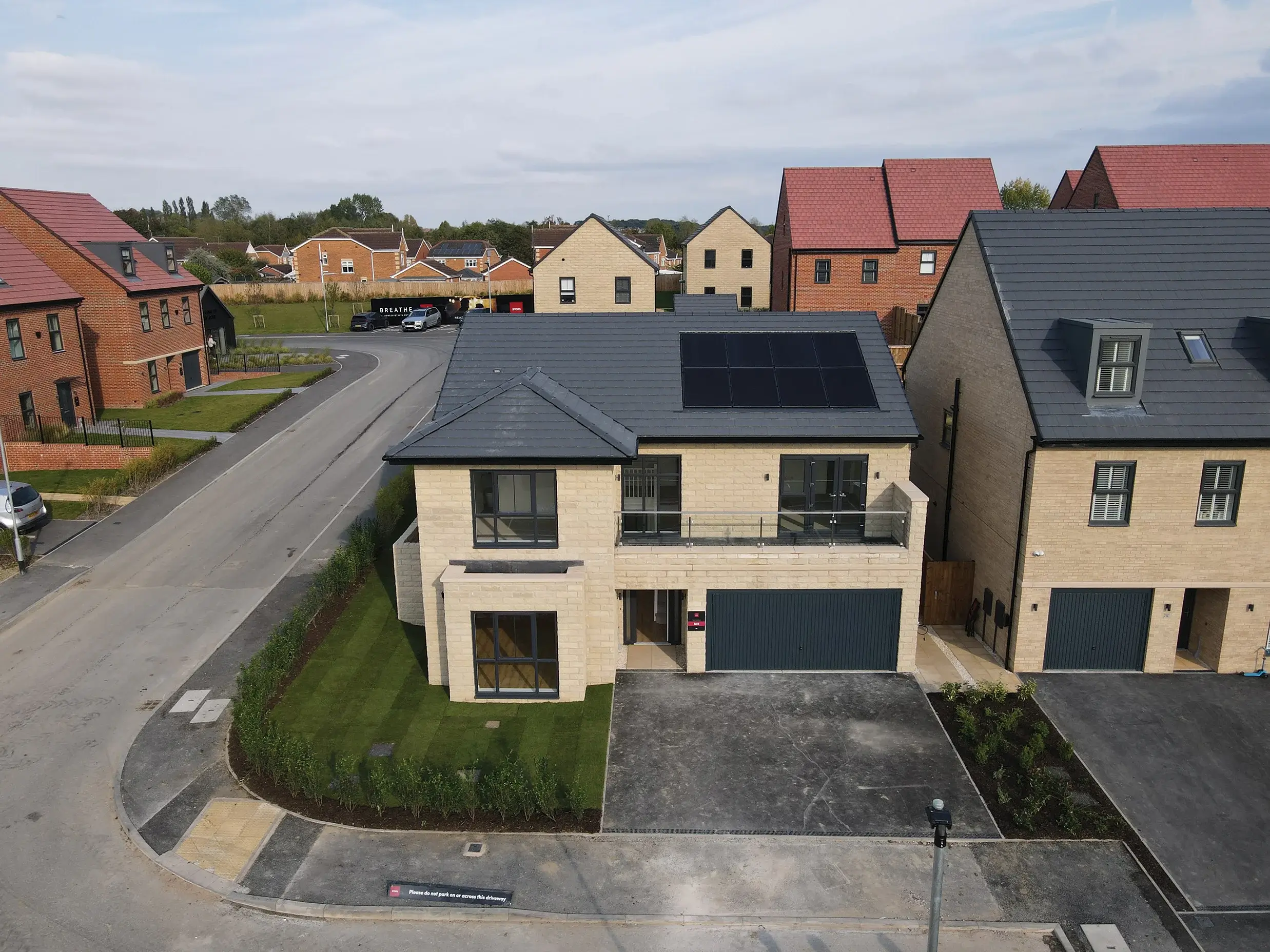
A key element of pulling together and pooling knowledge are the myriad ‘experiments’ and prototypes being run by housebuilders, suppliers and academic institutions.
Mike Leonard, of the Centre for Future Homes at Birmingham City University, is firmly focused on the future – specifically, how to design, build, commission and operate net-zero ready homes in the most practical and efficient way. For the past three years, he and his fellow researchers have studied energy consumption at a development of 12 homes purpose-built by Midland Heart housing association on brownfield land in Birmingham.
Part of the Project 80 initiative, these houses are designed to meet the proposed Future Homes Standard, with the main aim being to provide data and insights and create scalable and sustainable solutions for the housing sector, while also putting the end customer at the heart of it all. That balancing act is a tough one – complying with a dizzying string of carbon emission and other crucial numbers, while not forgetting that there will be real people living in these homes.
As Greencore Homes’ founder and innovation director, Ian Pritchett, points out: “It’s not just about saving energy and saving carbon when we build new houses, it’s creating really lovely, healthy, comfortable places to live.”
Greencore, backed by M&G, is attracting praise for its net-zero-in-operation homes, which incorporate connectivity and energy efficiency. The Oxfordshire-based company won Gold for Best Sustainable Development in the 2024 WhatHouse? Awards for its development of 12 net zero carbon homes constructed with closed timber frame panels insulated with natural materials and built into a timber superstructure. These panels are built in Greencore’s own factory, also in Oxfordshire, and then transported to site where the structure can be constructed in just two weeks.
Greencore partnered with SNRG, which put in smart grids, solar panels and battery storage to supply local place-based energy to the development in Hook Norton. The roof PVs power the homes, with excess going to the battery or returning to the grid. SNRG also added solar panels to a nearby sports centre and integrated that into the smart grid, so excess solar energy from there can be used by the homes or stored in the battery, further slashing bills and carbon emissions.
Last month, Greencore acquired a 12-acre site in Buckinghamshire to deliver up to 89 homes – all part of its plan to create 10,000 better-than-net-zero homes by 2035.
Advances in technology are also driving change; for example, strides are being made towards decarbonising materials, such as concrete, that had slightly fallen out of favour. And with housing, especially affordable, in such high demand, cost-effective solutions that speed up housebuilding seem a no-brainer for the future.
Beco Products’ award-winning Wallform insulated concrete formwork (ICF) system is made from large, interlocking hollow polystyrene blocks. Concrete is poured into it and sets to create a robust structure, with the formwork staying in place and acting as thermal insulation.
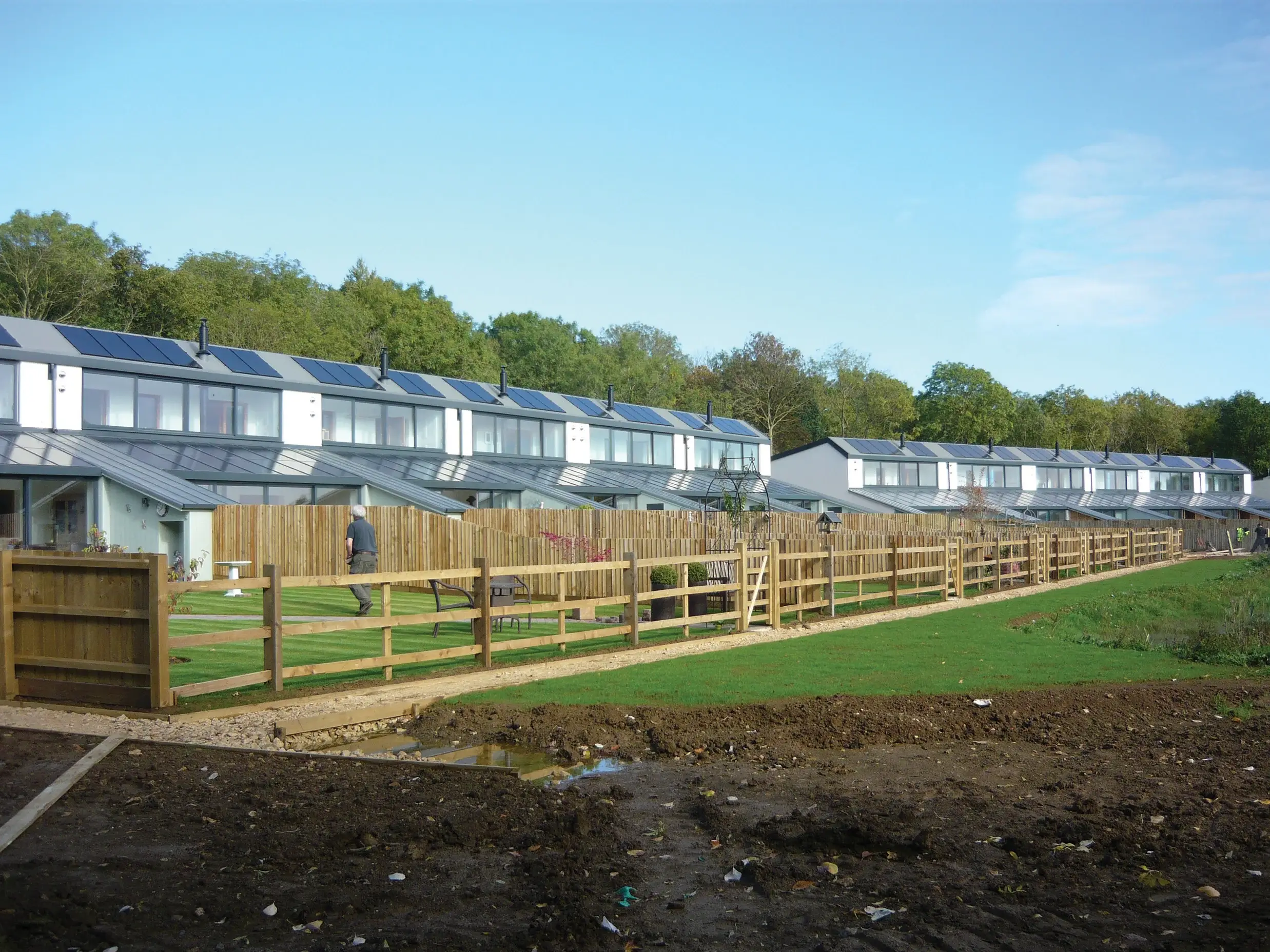
“It’s really encouraging to see the progress being made in the decarbonisation of concrete, both in manufacture and structural design,” says Robin Miller, Beco Products’ managing director. “The additional contribution of ICF systems in construction, building operation and enhanced useful life further reduce the timescale to achieve target zero and beyond.”
Of course, it’s not just about the exteriors of our future homes – internal energy efficiency is also crucial. Domestic appliance brand Haier, which also owns the Candy and Hoover brands, has a smart home offering including solar panels, air-source heat pumps, EV chargers and water cylinders. All these can be controlled and are connected to each other by Haier’s home energy management system and via the HON app.
Savvy consumers are actively looking for ways to save energy and, by definition, cash, so apps and smart systems like this are becoming a must-have. Haier recently provided all kitchen, heating and energy appliances for a two-storey close-to-zero energy house in Sheffield to show how this solution can create an eco-friendly home and deliver close-to-zero bills.
The company’s latest Gen 3 air-to-water heat pump is linked its 10kW battery/PV system and water heater, with PV to provide energy. And, since energy can be stored in the battery, any excess can be used to heat water.
“This is a game-changer for the consumers and the housebuilder,” says Steve Macdonald, business director at Haier UK & Ireland.
Another supplier working with housebuilders to create healthy indoor environments is VELUX. It recently teamed up with modular housebuilder Starship, which delivered 13 carbon zero homes for Onward Housing Association in the Liverpool area. The three-bedroom homes are built with strong eco credentials, and all include VELUX windows designed to maximise natural light.
VELUX also recently worked with Beau Property at its scheme at Whitecroft Gardens in Kent. The collection of three-storey homes, designed with help from VELUX, include top-floor master suites featuring roof balcony windows to add an extra wow factor.

The advantage of so many test houses is it’s becoming easier to compare heating systems. Leaps and bounds in technology are opening up more exciting options. For example, Wondrwall is pushing the envelope with its intelligent heat pump system, unveiled in November.
Chief product officer, Mark Lufkin says the company is “redefining” low-carbon energy efficiencies with AI-powered controls that can slash energy bills for heating by more than 80%. Lufkin’s team’s mission is “to make all homes as intelligent, energy-efficient, future-proofed and practical as possible”.
Lufkin, however, says that there is still a need to bridge the gap between sustainability and usability. As part of the drive to achieve Future Homes Standard, Wondrwall is opening its heat energy management (HEMS) platform to all heat pump manufacturers. Wondrwall is also making giant strides in educating housebuilders and homebuyers about the advantages of infrared heating, but the future is likely to see the industry as a whole investing more time and effort to introduce and explain alternative technologies.
All in all, we can be “optimistic for the future” as David Thomas said at the Future Homes Hub conference last month. “Our industry understands its role, sees its importance, and enjoys a challenge.
“I see an industry full of talented people working together towards a shared goal. Together, we can build sustainably, creating homes and places where people and nature can thrive at the pace and scale the country needs.”