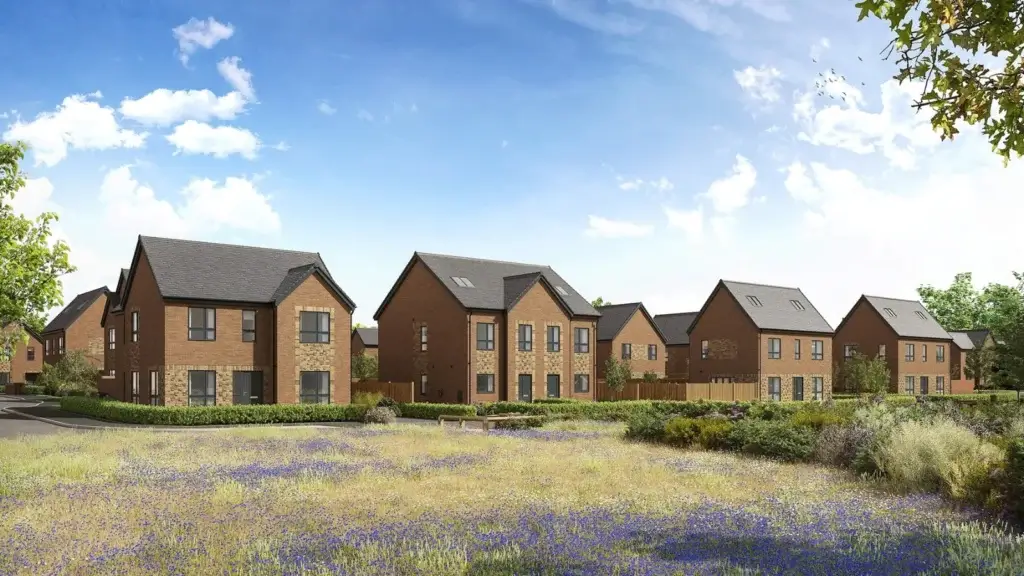
Over £1.6million of brownfield housing funding from the Greater Manchester Combined Authority is helping to unlock a new community of homes in Manchester city centre.
Social impact developer, Capital&Centric, has unveiled further detail of its 107-home rental scheme, Ferrous, which is set to start on-site later this year in Piccadilly East.
The £1,605,000 investment from GMCA will support the regeneration of a previously underused site formerly owned by Transport for Greater Manchester, bringing new homes forward on brownfield land in one of the city’s fastest evolving neighbourhoods.
The funding forms part of Greater Manchester’s wider drive to accelerate housing delivery across the city region while prioritising development on previously used land.
Despite not being required under the planning consent, Capital&Centric has committed to delivering around 15% of the homes as affordable housing, offered at a discount to market rent. The development will also include a new pocket park with mature trees and planting, alongside a small architectural kiosk designed as a launchpad for an independent food or drink operator.
Piccadilly East in Manchester is rapidly evolving and was recently recognised by the Sunday Times as one of the UK’s top up-and-coming places to live.
Capital&Centric has delivered a number of projects in the area, previously restoring Crusader Mill and kick-starting a wave of regeneration. Since then, the developer has delivered the Phoenix apartments, transformed Neptune Mill into a creative workspace and brought forward the 275-bedroom ‘Jenga’ hotel, now operated by Leonardo Hotels.
The new imagery sets out the developer’s vision for Ferrous, revealing a leafy public square woven into the growing Piccadilly East neighbourhood.
Tom Wilmot, joint managing director at Capital&Centric, said: “The GMCA funding is helping unlock new homes on a challenging city centre site while allowing us to deliver affordable homes as part of the scheme.”
“We’ve also carved out space for greenery and an independent operator because small pockets of public space make a massive difference. In a post-industrial city, you have to go big on planting. Kampus showed that, and we want to create a mini version here.”
Construction is expected to start later this year, with completion anticipated in 2028.