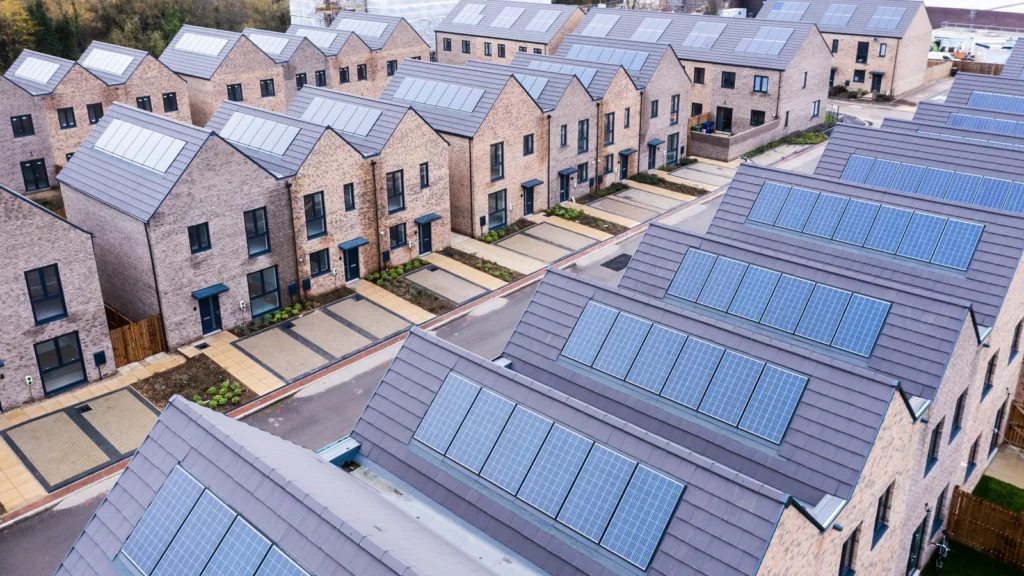
The OBR has revised its housing forecast, anticipating 190,000 fewer homes to be built over the next five years, compared to its previous expectations in March 2026.
The Office for Budget Responsibility announced the findings following the Chancellor’s Budget.
Industry reaction as Chancellor delivers first Budget
The watchdog’s report stated: “The weaker profile for housing supply in the near and medium term also partly reflects the cumulative effect of regulatory and fiscal changes outside the planning system over the last decade, particularly since 2019.”
“These policy developments have increased the cost, complexity and timescales associated with residential development.”
“These include measures aimed at improving building safety, such as the Building Safety Levy and Building Safety Regulator regime, environmental requirements such as Biodiversity Net Gain and nutrient mitigation schemes, and wider fiscal measures including the residential property developer tax and higher corporation tax rates.”
“Taken together, these measures appear to have weighed on housebuilding activity to a greater extent than we had previously assumed.”
The announcement is a blow to the government’s ambitions, as its target of building 1.5 million new homes during the Parliament looks increasingly out of reach.
The OBR’s report also finds that house prices are predicted to grow at an average of 2% in 2026, rising to 2.5% the following year, continuing the recent trend of house price growth being below CPI inflation as a result of higher mortgage rates and “stagnating” real incomes.
The OBR believes that the government’s Your First Home scheme has the potential to marginally raise house price by stimulating housing demand. It expects transaction volumes to reach 1.2 million in 2026, rising to around 1.3 million by 2031 as the housing stock continues to grow and the market turnover rate returns to an “assumed medium-term equilibrium”.
The figures represent a 4% drop in the number of transactions across the five-year forecast period from the OBR’s previous prediction in March.