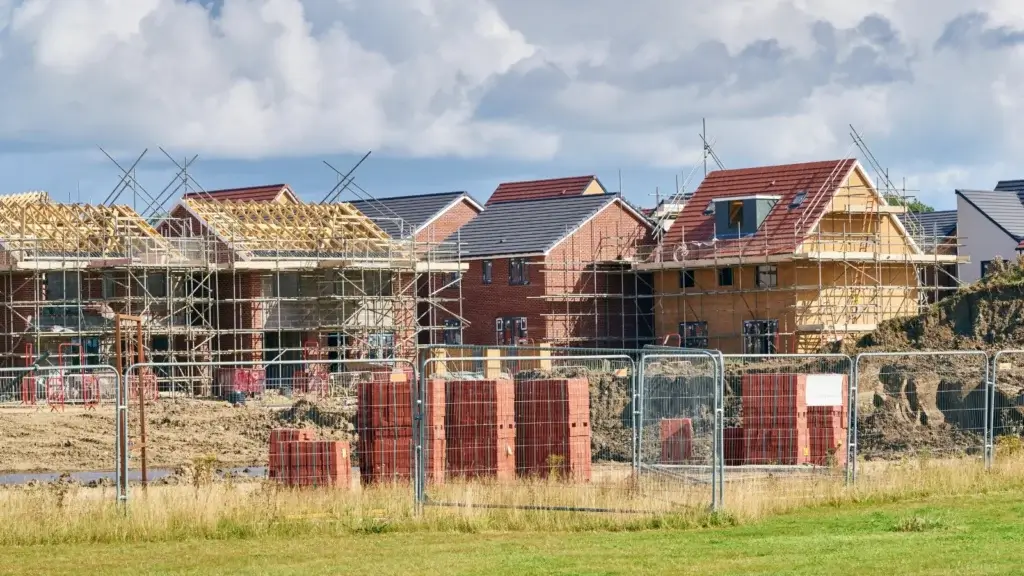
Show House’s Digital Editor, Rory Wilkinson, recently spoke to Terry Woodley, MD of development finance at Shawbrook, to talk about the impact of the Labour government’s pledges on the housebuilding industry and whether this has been reflected in the finance market.
- Since Labour came into power, there have been plenty of commitments and proposed changes for the housebuilding industry. How has that been perceived by the sector?
The developers we’ve spoken to are generally positive about the government’s plans to boost housebuilding, our research found that two-thirds (64%) of developers expect housebuilding to increase in the short term (within 12 months), and over half (51%) think housebuilding will increase in the medium term (1-3 years). This optimism comes after a flurry of reforms and investment in housebuilding over the past year, which has led the OBR to predict that housebuilding will reach a 40-year high. Whilst things are definitely moving in the right direction, developers will be looking for further clarity on the reforms to the planning system to ensure they’re able to move forward with projects.
- Has the 1.5 million housing target had a positive impact on the sector and do you think it is achievable?
Whilst the 1.5 million housing target is ambitious, well over half (59%) of developers are confident that new homes can be delivered in the five-year time frame. Key to this has been the government’s reforms of the planning system, which has been a major obstacle for property developers looking to push projects forward. Actions such as cutting planning red tape, boosting training to address the skills shortage, and pledging £113billion of capital spending over the next five years have resonated with developers and made the 1.5 million target feel more tangible. However, with planning approvals down by 9% in Q1 2025, a lot of these reforms are yet to be implemented, and therefore, we are yet to see the exact impact they will have.
- The Planning and Infrastructure Bill is key to the government’s housing target, do you think that it will bring the anticipated benefits to the industry?
Key facets of the Planning and Infrastructure bill, which will enter its second reading in the House of Lords, like planning committees, development corporations and strategic planning elements, should reduce red tape and streamline processes, which will play a crucial role in delivering the ambitious new homes target. This, combined with the commitment to fill skills shortages by increasing training and jobs within the construction industry, should give developers further confidence and the clarity needed to pursue plans.
- The government has recently announced additional support for SME housebuilders by relaxing BNG rules. How much of an impact do you think this could have on the industry?
Developers were likely encouraged by the government’s recent review of the Biodiversity Net Gain (BNG) requirements for smaller housebuilders, as this will help further streamline the planning process and boost housebuilding activity for SME housebuilders. This complements the wider efforts the government has made to address industry-wide issues such as the skills shortage, which will no doubt give developers across the board a confidence boost as we head into the second half of the year.
- How does Shawbrook support housebuilders with their developments?
At Shawbrook, we pride ourselves on taking the time to understand projects in detail and provide finance tailored to specific circumstances, whether this be new builds, refurbishments, student housing, or more.
We also offer a Planning Assistance Loan, which helps developers enhance the planning already agreed for a site. From this loan, developers can transfer seamlessly to a development finance loan to build the project, making it a useful product for those looking for additional support.
- Have you seen an uptick in development funding interest as a result of the increased confidence in the industry?
Over the last five years, the number of funding institutions focusing on the development sector has grown significantly in line with increased interest in development funding. However, due to build cost inflation and base rate rises over recent years, developers have found it difficult to make schemes profitable, which in turn makes it harder to secure funding. Our research found that 60% of developers agree that obtaining funds for development has become progressively more difficult, and many are also concerned about the limited availability of funding options. As a result, 35% of developers are calling on the government to invest more heavily in infrastructure projects, while 27% are advocating for the establishment of additional funding grants for developers to help bridge the financial gap.
However, this presents a prime opportunity for specialist support to help address these concerns and ensure the continued growth and success of developers across the country.
- How do you think the rest of the year will shape up for the industry and the country’s housing situation?
Whilst wider economic concerns are still very much present, the pieces are in place for a strong second half of the year. Property developers have already responded favourably to the additional support, with our research finding that 61% of developers believe the residential market will improve this year. Looking ahead, there are still reasons to remain optimistic, and developers should continue to keep their cool and plan for H2.