The latest Miller Homes annual accounts reveal a strong financial performance in 2018, a growing workforce and an increase in forward sales.
Of these new figures, chief executive Chris Endor said: “I am delighted to report an excellent set of 2018 results for Miller Homes with improvements in all key metrics. Of particular note, was the 15% increase in operating profit to £151m which enabled us to achieve an operating margin of 20% for the first time and ahead of plan. Land investment was 12% ahead of 2017 at £204m and at the same time, the business generated £82m of free cash.”
Other highlights from the accounts include:
- A 14% increase in total completions to 3,170 homes (2017: 2,775 homes)
- A 4% increase in average selling price to £249,000 (2017: £239,000)
- A return on underlying capital employed (ROCE) of 33.4% (2017: 33.0%)
- Circa 3,900 plots acquired in last 12 months
- Forward sales at £292m and 6% ahead of last year
- A 10% increase in owned landbank to 9,174 plots (2017: 8,364 plots) further supported by 3,350 controlled plots (2017: 5,374 plots)
- A 5% increase in the strategic landbank to 17,331 plots (2017: 16,561 plots)
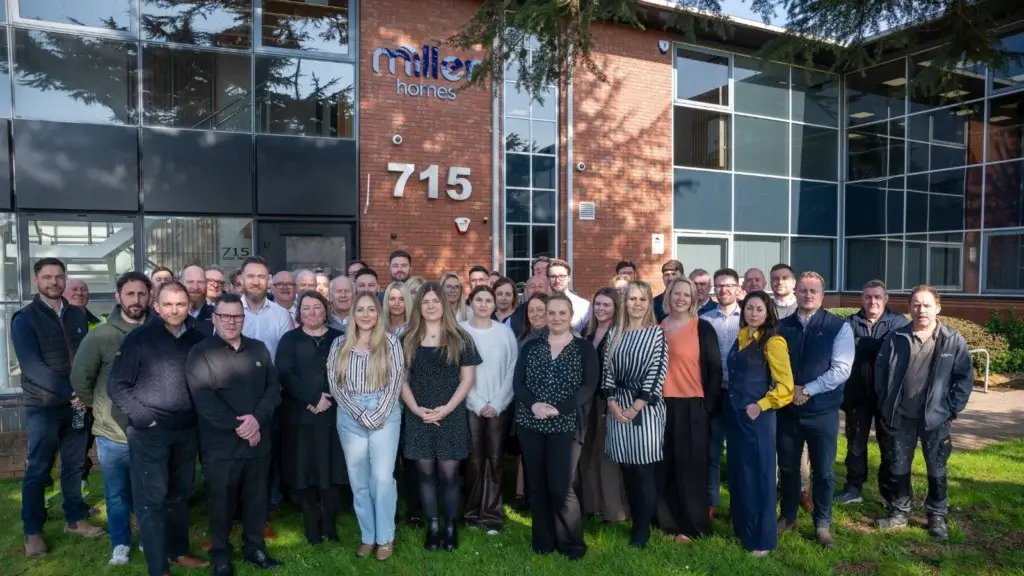
The housebuilder also reports an 11% increase in staff numbers, to c970, and is keen to underline that it has achieved 5-star rating in the HBF National New Home Customer Satisfaction Survey for seven of the last eight years.
The company is on track to deliver its strategic target of 4,000 homes by 2021, and has undertaken a product and specification review to benefit build costs from 2019 onwards. It also spotlights its West Midlands division, which delivered just under 350 homes in 2018, its first full year of operation.
Endsor added: “Demand for mid-market homes continues to be strong, underpinned by low interest rates and Government support with Help to Buy extended to 2023. We continue to have confidence in the resilience of the UK regional housing markets in which we operate and remain committed to our strategy of growing volumes incrementally to 4,000 units.
“Market conditions are continually monitored with the optionality in our business planning enabling us to adapt land buying depending upon demand and opportunities.”