Poor customer service can dent the best of reputations, but there are ways to ensure your buyers feel truly valued, reports Ginetta Vedrickas.
Acquiring consistent five-star ratings for customer service is no easy feat, but understanding the emotional journey that new-home buyers face is key, says Bewley Homes’ sales and marketing director Elaine Stratford: “Bewley is highly aware that the emotional journey we all go on when purchasing our home, can be challenging.”
For the second year running, the housebuilder achieved a Gold Award plus an Outstanding Achievement Award in recognition of the exceptional levels of customer satisfaction reported by homeowners. Specialist market research company In-house Research rewards companies providing exceptional customer service, with the award measured by achieving a net promoter score of 65 or above; Bewley Homes registered 76.5 last year, up 5% from 2022.
Stratford finds, that as the digital age moves apace and offers increasing benefits in communications, the feedback that customers give in its five-star surveys is what matters. She says that the housebuilder never receives feedback for the many ways it communicates information to buyers, such as emails, drone footage, or online video content, but it’s a different story when it comes to feedback about employees.
“What we do read is how amazing people have been. The site manager who has been helpful and reassuring; the sales executive who has gone out of their way to answer their concerns or questions; and the management who have stepped in at Bewley if there was a specific need, such as a delay or purchasing query. We meet our customers as directors and ensure that the sales team remain the great foundation of support, but escalation is also there when and if needed.”
Bewley’s video testimonials often reveal that buyers “fell in love with the sales team,” says Stratford. “That is a wide statement, which makes us all smile. I think what they mean to say is that the team made them feel special and valued across the entire purchase period.”
Bewley’s customer care process is enshrined in its aftersales, which includes measures such as a home demonstration, moving-day experience complete with ribbons on the door and personalised customer gifts. Welcome visits plus an online customer portal provide useful information and notifications during purchase and after moving in.

Relationships, referral business and five-star ratings are all vital explains managing director, Andrew Brooks: “Achieving an incredible five-star Gold Award for Outstanding Customer Satisfaction is a wonderful acknowledgement of the customer ethos which runs through the core of the Bewley team.
“Our real prize is meeting people and seeing the look of delight on the faces of our customers when they collect their keys and when they’ve moved in. The award certificate is the icing on the cake but hearing that we are frequently being referred to friends and family as the company to purchase from, or even to receive fantastic surveys and feedback, provides us all with the motivation to continually refine and develop our service in the ways which our customers need and value.”
Another five-star housebuilder, Hayfield, describes itself as a “customer-centric business” with one of its key objectives that customers are 100% satisfied with their purchase experience. Marketing director Ranjit Kang says that, while the modern world advocates a push towards digital and AI customer services, Hayfield believes in a people-first approach, providing a considered and personal service, with technology in place as a support resource.
“Its unique service approach ensures customers feel well looked after and experience the difference of buying a home from Hayfield,” says Kang, pointing to the housebuilder’s four key roles, which focus wholly on delivering an individual service: customer care managers, quality managers, coordinators, and new home technicians.
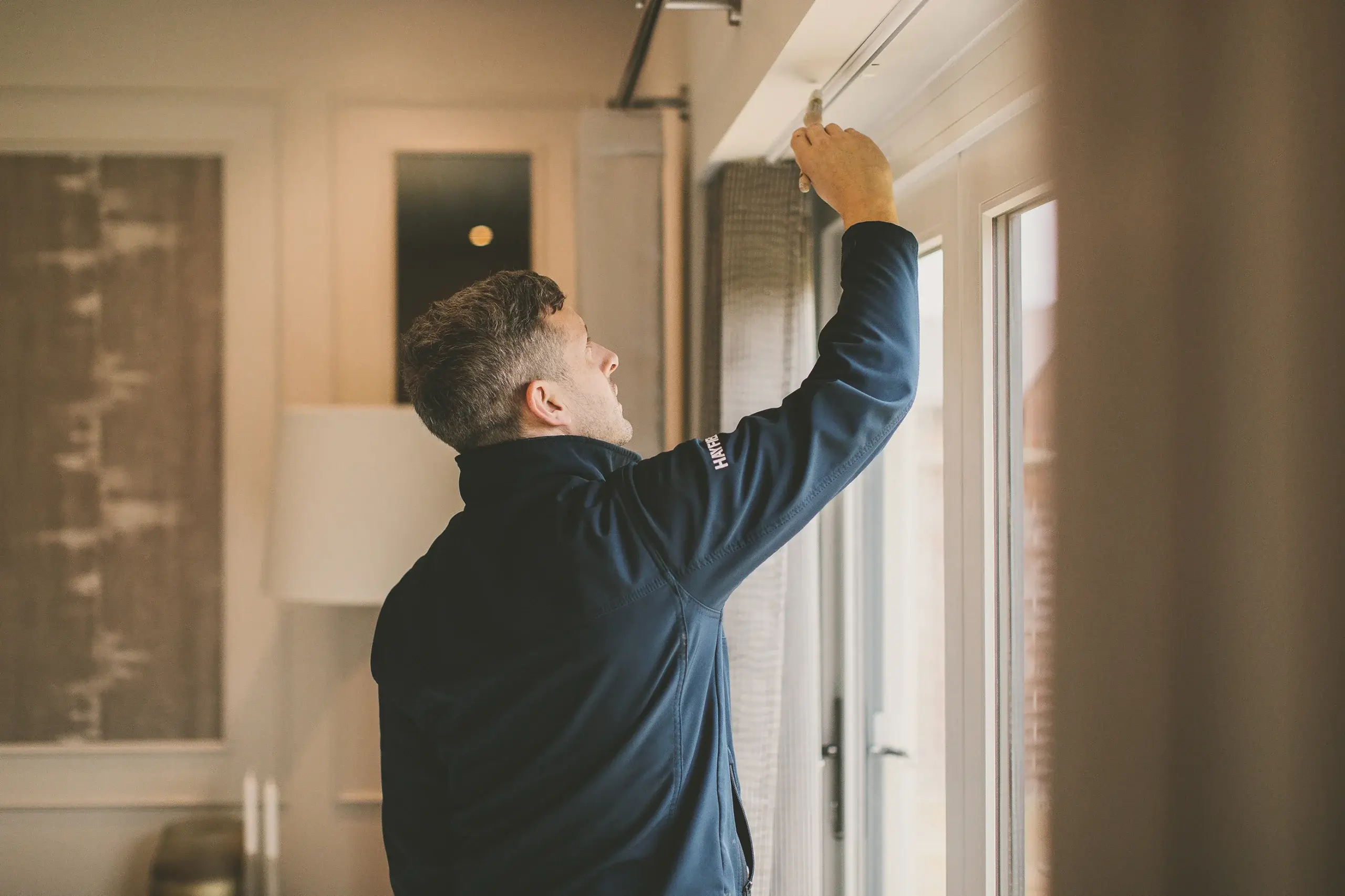
At the point of exchange of contracts, the customer is passed from the onsite sales development manager to their dedicated customer care manager for the rest of the build process to legal completion and beyond. The customer therefore has one point of contact before moving in and throughout the two-year warranty period, as well as the consistency of having the same quality manager and new home technician.
“This approach, alongside various technological applications, such as the Site Audit Pro App, which makes audits and inspections quick to carry out and manage, has resulted in improvements in communications and remedy of repairs between site teams, customer care and subcontractors, all for the betterment for the customer,” says Kang.
Hayfield’s online customer portal allows customers to access an array of information about their home and local community at any given time, from ‘how to’ videos and appliance manuals to local amenities and more.
“The ethos of putting the customer at the heart of all decisions has driven Hayfield’s reputation and independent recognition of excellent customer service, whereby over nine out of 10 customers would recommend Hayfield to a friend. A personal service that is as individual as the customers themselves,” says Kang.
Afterbuild’s Mark Hicklin is well aware of the challenges facing housebuilders: “There’s no question, the market is tough, and the wider economy presents a difficult set of challenges for everyone. All the more reason not to neglect the one thing that can set you aside from your competitors: service.”

Afterbuild specialises in providing aftercare so that housebuilders meet warranty and industry code obligations, while supporting buyers during the first two years: “We’ve been doing this for over two decades, so we have significant insight into the hurdles a developer faces. Most of these are predictable and very often avoidable, yet so many businesses find themselves in a deep hole because they failed to plan.”
The mantra must be “aftercare, not afterthought,” says Hicklin: “It must be planned and needs a budget.”
“It is no less important than ordering building materials or engaging contractors. Sadly, it is still often an afterthought or worse. Responsible developers know that their customers deserve a professional, reliable after-care service and they understand the consequences of failing to do this.”
Warning that today’s buyers have high expectations and have the threat of social media in their pockets, he says: “Fail to put in place a reliable programme at your peril,” adding that many aftercare problems arise because of a weak or badly written build agreement, which allows the contractor to turn their back on snags and, later, legitimate defects. “Ensure there is adequate reference to aftercare, setting out both developer and contractor obligations.”
Along with detailed advice covering the build agreement, Hicklin says that Afterbuild is well-placed to advise on all aspects of customer care including snagging, quality assurance inspection, aftercare and after-build. On aftercare, he suggests having a process in place that will respond to the purchaser from day 1 to day 730.
“If a home is snag-free when they occupy it, this journey will be relatively stress-free. But if a purchaser moves into a property with a whole host of snags, then you have let them down and they will never forgive you. The next two years will be spent constantly on the back foot, desperate to catch up. It’s the worst start to any aftercare relationship.”
To housebuilders that get into arguments with contractors who fail to support aftercare objectives, he says: “Don’t make your customer wait while you sort out your differences. You may believe that they haven’t a leg to stand on and feel loath to proceed until they ’come to their senses’. But, from the homeowner’s perspective, you’re just making a bad situation worse. Get the problem resolved, don’t force the homeowner to wait a second longer than necessary. Sort out your contractor afterwards.”
Embracing GBuilder technology improves efficiency and customer experience, explains GBuilder business development director Charlie Olpin, who suggests enhancing the procurement process to go beyond standard practices, incorporating advanced digital tools and data analytics for better decision-making. To increase revenue and profit, he suggests streamlining procurement to minimise costs and optimise spending, directly boosting revenue and profits. GBuilder can help utilise unique data so that housebuilders can leverage specific data insights to improve sales strategies and outperform competitors. As for collaborations in the sector where GBuilder has made a difference, Olpin points to its ability to enhance the buying experience by reducing errors and delays in construction, leading to a smoother operation and improved customer satisfaction.
Elevana says that its “unique combination of services” can empower housebuilders to make dreams come true and deliver exceptional customer satisfaction during what it calls “the critical 12 weeks” covering four weeks pre-completion and eight weeks after. This is when customer expectations are often at their highest, and sales, construction, and customer care teams can be stretched thin as they try to finish homes and successfully move-in buyers.
“Up to the point just before legal completion, all that has been created in the customer’s mind is a dream. Based on visiting the site, the show homes, looking at the website, reading the brochure and meeting the team. That dream only begins to become a reality when the customer is able to see their own property, in its finished state which is typically at or around the new home demonstration,” says managing director Malcolm Pitcher. Describing the “nightmare scenarios” that can occur when customer satisfaction plummets, he points to two potential scenarios: a first viewing, when the new home falls short of expectations or fails to align with the dream; or when the handover and post-handover customer experience do not align with the developer’s promises.
Elevana’s divisional director, Jack Fowler, says the company has spent the last two years enhancing services to cover “the critical 12 weeks”.

“By offering a full-service capability, we can relieve the pressure and deliver a consistent experience to every customer, designed to maximise customer satisfaction.”
“From working with many clients, we know that this period can place a lot of pressure on the sales, construction and customer care teams, and, sometimes, corners can be cut.”
Elevana starts with a property’s pre-demonstration inspection, it then liaises with construction teams to ensure everything is perfect. “We can then organise and deliver consistent and professional demonstrations and handovers. After the handover, we can provide self-help videos, manuals, and guides to ensure customers continue to look after and maintain their new homes. We even offer a ‘full knowledge guarantee’, meaning that if the customer forgets something we told them during the demonstration, they can call us for advice,” says Fowler.
Fowler accepts that some housebuilders prefer to deliver their own demonstrations and handovers, but close cooperation ensures that Elevana becomes a seamless part of their customer journey. “While most of our clients currently choose some of our services as the need arises, we are delighted that we now have clients taking advantage of the full service, and we expect that number to grow.” Argent is a current client, at its Kings Cross Development: “We are currently on our second project, Capella, which includes 120 units, after the successful delivery of quality inspections at Cadence.”

NHCC’s team of inspectors and surveyors carry out professional snagging services as part of a pre-handover inspection, which it believes helps “improve the quality of output and alleviate concerns ahead of completion”. The team can help housebuilders adhere to The New Homes Quality Code and each plot is given a rating between 1 and 5, with 5 the most severe, allowing the onsite team to prioritise any follow-up actions. NHCC guarantees to identify snags well ahead of time and help site teams put them right in plenty of time before legal completion, a service which costs as little as £199 per inspection.
“I would advise them to follow the best practice in the insurance industry of outsourcing to specialist suppliers, to deliver optimal customer journeys, benefit from customer care service economies of scale that specialists like NHCC are able to provide access to,” explains managing director James Bush. “We continue to invest in our technology, to integrate with our clients, and provide transparent, real-time updates to our customers.”
NHCC is contracted to provide aftercare services to housebuilders, housing associations and BTR specialists for over 20,000 homes across the UK. Tom Stoneham, senior development manager for HUB, a progressive developer with a focus on BTR with a portfolio of more than 5,500 homes, says: “We have worked with several different organisations to help us with telephony and defect management, on a number of our schemes to date. Compared against them all, NHCC is the best. They are very slick, efficient, and very helpful in all that they do.”
Signtouch is helping Vistry Homes to create a sales and customer service centre of the future, says managing director Mark Cowin: “Creating an immersive, interactive experience for new-home buyers is even more important than ever in a slightly tougher market where housebuilders can differentiate through service.”
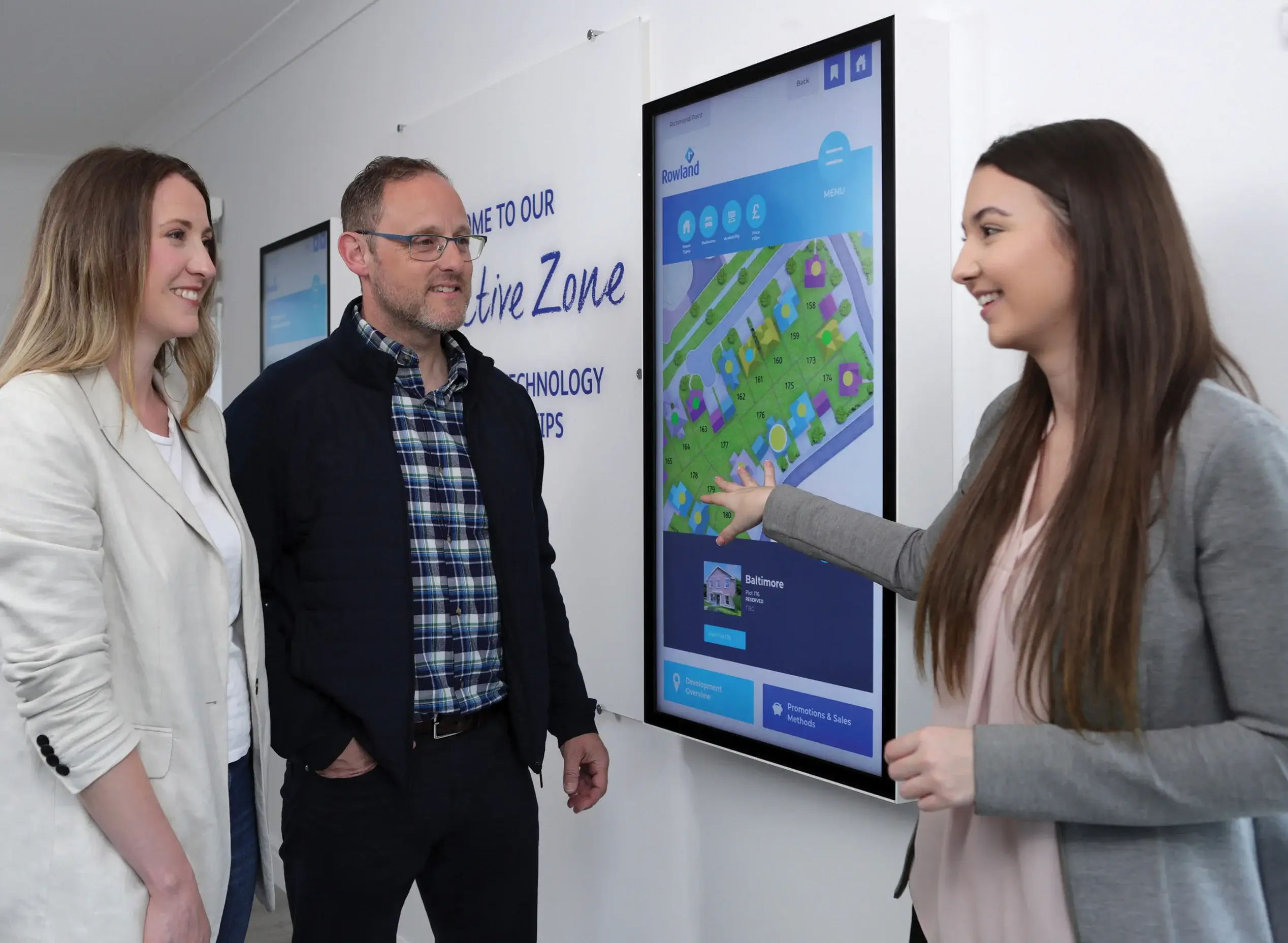
The company has already supported the housebuilder with two launches scheduled for later this year. “A great amount of thought has gone into utilising technology in new and innovative ways combining physical and digital experiences,” adds Cowin.
Signtouch recently developed a kitchen configurator product that introduces “lift and learn” technology, enabling potential buyers to actually touch and feel the item, for example, a worksurface and tile, with their choices then displayed in virtual reality on a large screen.
“Other products such as digital twins of a house can be used post-completion as an interactive home user guide, adding great value to post-completion customer care,” says Cowin. “The same digital twin can be utilised to convey the sustainability credentials of new homes by showing how they are constructed in a visually engaging way.”
In today’s competitive housing market, customer satisfaction remains a cornerstone of success, says In-House Research’s chief executive, Tom Weston: “For housebuilders, maintaining robust aftercare services is only part of the journey, as consumers now expect more.”
Weston feels the industry has been process-driven, focusing on “the ideal customer journey” traditionally, but says this can be restrictive: “While this structure allows for consistent monitoring of communications and relationships, it strips away creativity and the personal touch from building relationships with customers. Often, these personal elements can have the biggest impact on overall consumer attitudes.”
Weston believes that much can change during the build process, causing consumers to stray from the “ideal journey” and fall into a pattern of missed or incorrect automated communications, leading to frustration and confusion. He points to research by PwC that asked consumers to cite what was important to them when buying a product or service, revealing that most wanted an efficient, easy, and convenient experience, which, he points out, is in stark contrast to the homebuying process in the UK, which is “long, complicated, and subject to change at short notice,” says Weston. “With growing regulatory pressures, this is likely to get harder before it gets any easier, and consumers are less patient today than they were 10-15 years ago.”
Weston advises blending technology with the personal touch: “While technological solutions can streamline processes, the personal touch remains irreplaceable in building trust. Automated email reminders and chatbots can quickly address basic queries but ensure there’s always an option to speak directly to a customer care agent. Personalised follow-up calls after significant milestones can create lasting positive impressions.”
Proactive communication and implementing a continuous feedback loop are important as are post-purchase surveys and digital touchpoints, adds Weston, who says that focus groups can provide vital insights into changing customer expectations.
“Empower your customer care team with ongoing training that emphasises empathy, active listening, and solution-oriented thinking. This ensures they handle concerns with professionalism and genuine care. By offering personalised experiences that cater to individual needs, whether through customised home designs or flexible service plans, housebuilders can exceed expectations.”
Customer care strategies are integral to fostering relationships with buyers: “By collaborating with market research organisations like In-house Research, housebuilders can refine their services and harness both technology and the personal touch to deliver exceptional experiences. As customer expectations continue to evolve, the companies that prioritise proactive communication, continuous feedback, and tailored services will be the ones that excel.”