
With a new government in place plus the Future Homes Standard almost upon us, choosing an informed heating supplier to guide you through the legislation has never been more important. Ginetta Vedrickas reports.
In a bid to decarbonise new homes, the Future Homes Standard will require all to be heated with a heat pump or low-carbon district heating, which Aira UK CEO Daniel Särefjord believes will at least “futureproof” British homes. Särefjord says that, by 2025, new homeowners moving into a home fitted with a heat pump will enjoy a 25% saving on their heating-related costs, a 75% reduction in their home’s carbon emissions plus an opportunity to benefit from state-of-the-art home heating solutions.
Särefjord says: “Aira’s specialist team of relationship directors work closely with housebuilders across England, Scotland and Wales, offering consultations with design and installation experts to tailor heating solutions to their needs, ensuring quality installations and maximum efficiency.”
“We also offer amazing customer aftercare with our Aira Heat Pump, which comes complete with a 15-year comfort guarantee, including performance, product and installation warranty. This provides customers with ultimate peace of mind, so they can relax into their new home knowing that Aira experts are on hand to keep hot water flowing and their home comfortable for over a decade.”
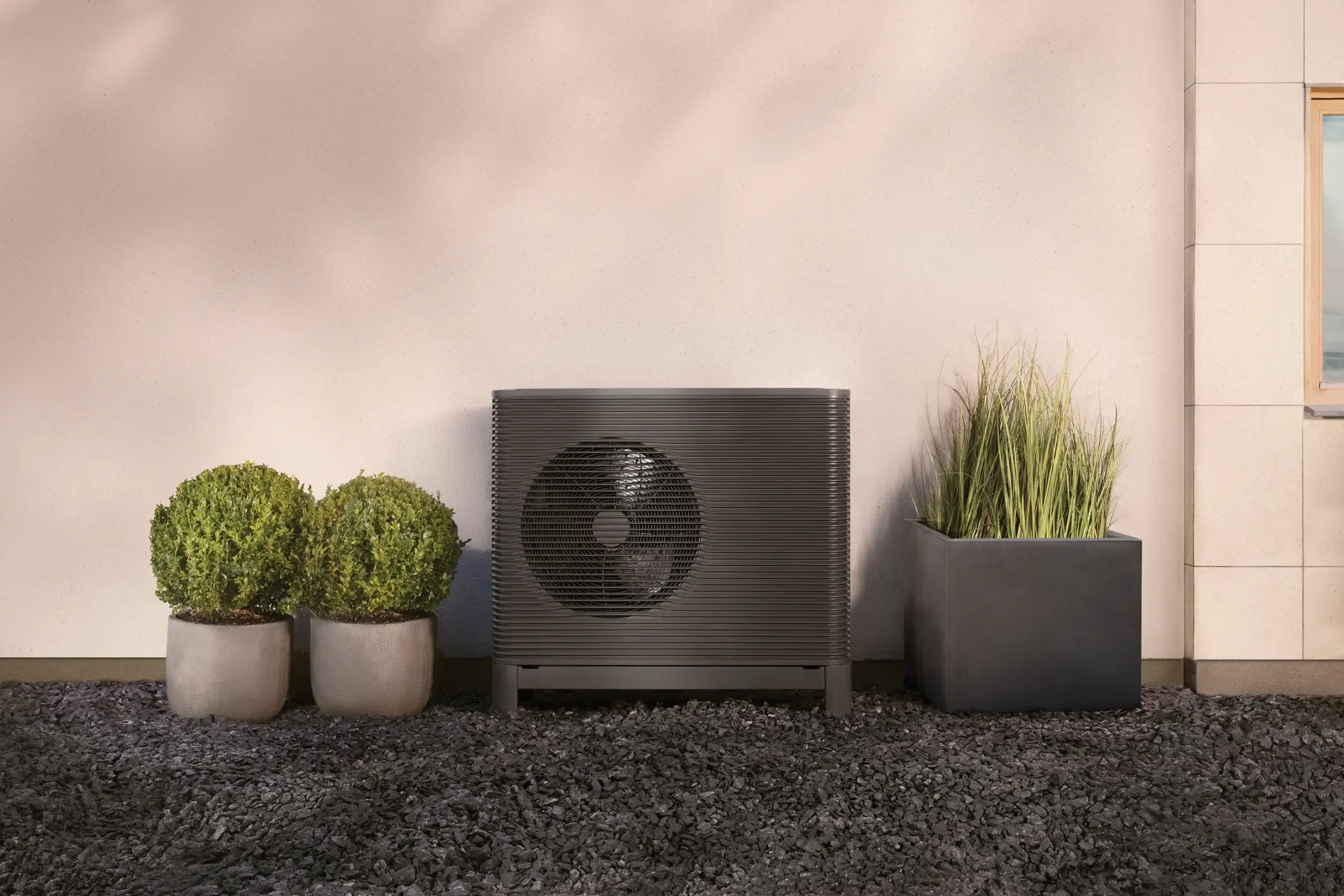
Having invested in a giga-scale heat-pump factory with capacity to produce 500,000 units annually, Särefjord praises his competitors for similar expansions: “We’re not alone in launching new manufacturing facilities, which is encouraging to see as we need to come together as an industry to accelerate the transition.
“It takes a lot longer to build a new home than it does to manufacture a heat pump, solar panel, EV charger or domestic battery storage unit. What’s more important is for architects, developers and consumers to be aware of the net zero options available to them when designing, building and buying a new home and demand that technology from property developers.”
With domestic heating contributing 16-18% of the UK’s carbon emissions, one of Europe’s highest, installing a heat pump is the single most effective step to lowering household carbon emissions, with a 75% reduction, a number that rises to 100% with renewable electricity, adds Särefjord.
“The gas industry generates a third of the UK’s carbon emissions, the majority of which is imported, that’s one of the main reasons why the electrification of domestic heating is seen as being in the national interest.”
“Furthermore, well-installed heat pump systems are at least four times more efficient than gas boilers and generally last 50% longer, two reasons that contribute to the overall lifetime cost saving. Heat pumps also require less maintenance than fossil fuel-burning boilers, which significantly contributes to reducing the product lifetime cost of ownership.
“To remove any upfront costs for the consumer, Aira offers an affordable pay-monthly payment plan, which incorporates the Boiler Upgrade Scheme grant, requires zero upfront cost, and reduces bills from day one.”
Mitsubishi Electric is keeping a close eye on the political climate post-election, explains Russell Dean, Mitsubishi Electric, residential product group director: “We hope that the next government will come forward with a renewed emphasis on decarbonising the UK’s buildings to reach net zero by 2050.”
“Importantly, to help achieve this, 600,000 heat pumps must be installed annually by 2028, a target set by the government. The current rate of installation is far less than 100,000 a year, so more must be done to ensure the increase needed.”
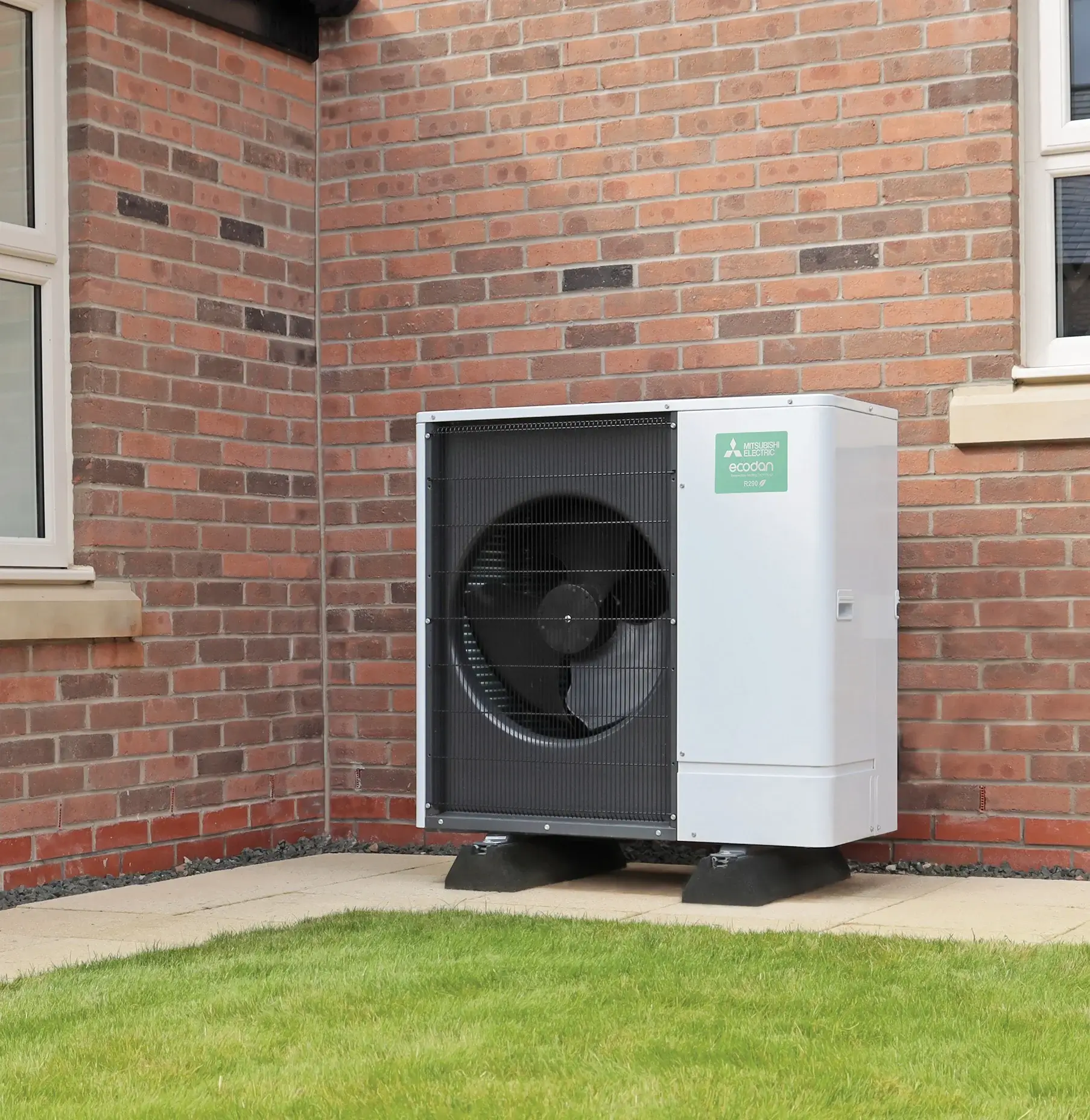
Mitsubishi Electric is calling on the government to rebalance the cost of electricity and gas: “The price of electricity in the UK is far higher than that of fossil fuels and this puts an unfair and expensive burden on households and businesses wishing to adopt and install renewable heating systems such as heat pumps.”
Longer term, he wants to see levies removed from electricity bills to balance costs; in the short term, Mitsubishi supports the Heat Pump Association’s call for a Domestic Heat Pump Tariff Discount, which would reduce the price of electricity used for hot water and heating produced by a domestic heat pump. Dean feels that this would make electricity more affordable for many families at a time when there is a cost-of-living crisis.
“It will also move household energy requirements away from fossil fuels and volatile oil and gas prices, back UK energy security as the nation moves to renewable energy sources, and help to grow the green economy and employment in Britain”.
Dean says that while the focus remains, rightly, on decarbonising Britain’s homes, we need to look at opportunities in the commercial sector, where heat pumps can also play an immediate role in decarbonising buildings.
“We would therefore urge the government to continue and increase support for programmes such as the Public Sector Decarbonisation Fund, along with publicity campaigns to increase awareness among UK businesses.”
Dean also calls for increased support for apprenticeships in renewables and more colleges offering training in heat pumps, along with the promotion of the career benefits of sustainable engineering. In May, Mitsubishi opened its Livingston training centre for heat pump installers to help meet the UK target of 600,000 installations by 2028.
“Government support, along with hands-on, innovative online and virtual reality training from manufacturers such as Mitsubishi Electric, will quickly address any skills gap by significantly increasing the number of heating engineers adding renewable heat pumps to their portfolio.”
Mitsubishi client Barratt Developments is also calling for a solution to the skills shortage. Oliver Novakovic, technical and innovation director for Barratt, says: “The key challenge as we transition to heat pumps is the shortage of skills. Currently, there are around 4,000 installers, whereas we need 44,000. We are working with the manufacturers and our trades to help ensure that training is in place, and everyone is in a position to scale up.”
The housebuilder works with other major suppliers, including Vaillant and Daikin, which are all developing capacity to meet the Future Homes Standard. Novakovic also wants to see the cost of installing heat pumps (currently around 10 times more than a gas boiler) addressed, but the housebuilder fully supports the low-carbon solution, which it is rolling out at scale.
“At Barratt’s first gas-free development, Delamare Park in Somerset, we’re fitting air-source heat pumps on all 82 homes. The heat pumps have reduced annual carbon emissions by more than 50%, compared to if we’d fitted gas boilers.”
He sees the industry “innovating continually” and is determined to challenge its supply chain to deliver new products that meet consumer needs. “Some consumers have said that they don’t like the noise that heat pumps can make. However, the newer heat pumps are almost silent, such as the Vaillant heat pump that we are testing at Energy House, the climate control chamber at the University of Salford.”
With nearly 20 years of experience in the renewable energy sector, Go Geothermal is one of the UK’s leading suppliers of heat pumps and other renewable energy products, including underfloor heating and solar panels. It too believes that one of the main issues facing the sector is the lack of heat pump installers and, as a result, it recently launched Go Green Academy, the UK’s first BPEC-accredited mobile training centre. In addition to two heat pump training centres in the North East and Midlands, this means it can now take training on the road for those seeking to become heat pump installers.
“This is designed to provide flexible training opportunities across the country and encourage the industry to gain the skills needed to decarbonise homes and buildings in line with UK plans to become Net Zero by 2050,” explains commercial director Darran Burrage.
In 2006, Go Geothermal was set up by executive directors Sean Sowden and Tim Williams and the company now employs 24 people split between its head office and warehouse in the north of England and commercial office and retail showroom in the Midlands. Burrage says that it can partner with housebuilders to offer a “cradle to grave” solution for all their renewable energy requirements, as they seek to move away from fossil fuel technology as net zero targets fast approach.
“We aim to source over 70% of our products from the UK and, because we offer air- and ground-source heat pumps, underfloor heating and solar panels, it means we are a fully renewables distributor, with technical support included. This is reflected by our company tagline, ‘technology from the ground up’, as we are involved in all stages of the process.”

Part of the CTC AB Group, Go Geothermal offers a one-stop shop for ground- and air-source heat pumps made by the world’s leading companies in this field, including Midea, Vaillant and CTC. The company has exclusive rights to CTC’s brand of heat pumps in the UK; the company was the first to launch an air-source heat pump back in 1985, and one of its newest products is the CTC 700 Series, a groundbreaking air-source heat pump that provides both heating and cooling, which uses R290 natural refrigerant to make it more environmentally friendly. Midea also recently chose Go Geothermal as one of its select few distributors of its high-performance heat pumps.
“The CTC 700 series is an ideal solution for premium developers and comes with a seven-year warranty, while Midea would work well for volume developers with a 10-year warranty for their homes. Both are available with planet-friendly R290 refrigerant,” says Burrage.
The company believes that ground-source heat pump technology is “making a comeback in the new build sector where housebuilders have concerns for siting air-source heat pumps in small back gardens”.
It recently supplied ground-source heat pumps for a national and regional housebuilder in Milton Keynes and Stansted. Originally the developer wanted air-source, but switched due to upfront costs, install time and quietness of ground-source heat pump technology from CTC.
Legislation can be baffling, but Eurostove’s managing director, Chris Baines, sees housebuilders increasingly turning to electric stoves for a variety of reasons: “Woodburning stoves come with more legislation, and also require a chimney, so have to be incorporated from the word go. They also impact on the building requirements for airtightness, due to the extra hole of the chimney.”

Baines says that electric stoves make a lovely centrepiece to a home, while fulfilling any additional heat requirements, but not contributing further to the legislation and regulations, and new-home buyers agree: “People nowadays prefer the clean, electronic finish that an electric stove provides, while also being conscious of any environmental impact from fossil fuels.”
With the recent change in Part L Building Regulations, plus more changes on the way, hot water cylinders are now back in focus and are “an essential component on the low carbon journey,” says UK Cylinders. The company offers a universally compatible family of products that can work seamlessly with both heat pumps and solar PV systems. It works alongside its designers in order to specify the correct size of cylinder for each house type, ensuring all relevant standards, such as MCS, are met. As products are universal, UK Cylinders can match up to any heat pump and are often a cost-effective choice for the specifier.
“All our products are manufactured here in the UK, by local skilled engineers; this, coupled with our knowledge and experience, has resulted in the correct family of products being available at the right price,” explains director Tony Staniforth.
“For example, some heat pumps require a buffer store, which is effectively hydraulic separation for the system. This is often described as the ideal installation by heat pump manufacturers, providing optimum performance and free water volume for the heat pump, that’s why we offer both ‘with’ and ‘without’ buffer options in our product portfolio.”
Staniforth finds that installers tend to prefer pre-plumbed units, assembled and quality checked in its factory: “This is a neat solution and ensures continuity onsite, guaranteeing all houses look the same, but it can also save time on installation and obviously does away with any risk of costly errors. The result is customer care teams are happy and projects run smoothly.”
Thanks to its technical expertise and close collaboration with leading UK heat pump manufacturers, UK Cylinders can help housebuilders choose a heat pump: “We are well placed to offer an unbiased opinion and, indeed, provide introductions and a full house type design where necessary,” says Staniforth, adding that, if heat pumps are not your first choice and your standard designs are still gas boiler biased, its family of PV priority cylinders, designed to harness surplus solar electricity for hot water production, could be the solution.
“This can have a dramatic effect on the SAP calculation results for housebuilders and assist in reducing the number of solar panels required.”
Long-term guarantees are often a bugbear, but WMS Underfloor Heating reassures that all of its installed superior quality PE-RT pipes come with a 50-year product warranty, offering housebuilders and homebuyers peace of mind in the quality and durability of its products, explains Ashley Cooper, WMS’s managing director, who adds: “However, if the pipe is not disturbed during its use, it is expected to outlive the life of the building itself.”

The pipe is a five-layered polyethylene tube using PE-RT, polyethylene of raised temperature resistance. Manufactured to the company’s own specification and composed of five bonded layers, polyethylene has “excellent properties at high pressures and temperatures” as well as being flexible and easy to use, says Cooper.
“It is noncorrosive, has very good resistance to frost, and has a high impact strength. It’s also creep-resistant and contains an integral EVOH oxygen barrier layer to prevent water oxygenation inside the system. Unlike PEX pipework, which has toxins in it that can only be burnt or buried due to the molecular cross-linking process, our PE-RT pipe is completely environmentally friendly and can be easily melted and recycled.”
Working hard to reduce its carbon footprint by lowering the environmental impact of components and systems wherever possible, WMS uses smart software technology during installation programmes and precision planning to minimise journey times, using the most efficient routes for installation teams. Electric vehicles also help reduce its carbon footprint.
Cooper warns that it’s never been more critical for new-build heating systems to work harmoniously to maximise efficiency: “In this new era of housebuilding, heat pumps are fast becoming the go-to solution and, when paired with a low-temperature emitter such as hydronic, water-based, underfloor heating, the two solutions work seamlessly together to support a low-carbon heating system. Underfloor heating is the only low-temperature heat emitter which supports heat pumps in achieving their most effective COP, with flow temperatures around 35°C, making it the ideal technological pairing. We also work closely with heat pump providers, designing our systems holistically to achieve maximum whole system efficiency.”
“WMS have been designing, supplying and installing low-temperature heating systems since 2003, so we have the expertise to find the right solution.”