We speak to Sheleendra Fernando, founder of 24/Three Architects, about the importance of creativity and a skilled team in his practice’s wide-ranging portfolio across the housebuilding sector.
Please tell us about your role.
I set up 24/Three five years ago and in that time my role has changed significantly. In the early days, I was doing everything myself, meeting clients, preparing fee proposals, designing schemes, managing finances and making the coffees. As we’ve grown, my role has shifted – although I still make a banging cup of coffee.
We act as both design architect and/or delivery architect so I always make a point of being involved at the start and to remain closely involved through concept design, major design reviews and client meetings, while our experienced project teams lead the day-to-day delivery.
Although the majority of our clients are in the housing sector, we don’t have a house style of architecture, nor do we have a fixed methodology – I’ve found that every client has different commercial objectives, programme pressures and ambitions for a site, so we always start by listening and questioning, so we can help assess opportunities, maximise value and shape the brief for our project leaders.
From your perspective, how has the UK housebuilding industry changed since you started in it?
The biggest change I’ve seen is that the pinch is getting tighter for both housebuilders and consultants. Housebuilders are facing rising build costs, additional levies and increasingly complex regulations, all while trying to deliver homes that remain commercially viable in a challenging market. Those pressures naturally flow through the supply chain too.
Developers understandably find it harder to absorb rising costs or increase selling prices, while consultants are expected to deliver more but often without fees increasing to reflect the additional work involved. It’s a difficult balance, and I think those pressures are only going to continue.
What inspired you to start your own company?
There wasn’t a single defining moment, it was a combination of ambition, timing and wanting to build something that reflected my own values.
I was at a stage in my career where I was taking on increasing responsibility but wasn’t seeing the opportunity to progress in the way I hoped. At the same time, my personal life was changing rapidly and my wife and I realised that if I was ever going to take the leap, it had to be then.
Starting a practice during the pandemic wasn’t exactly simple, but it taught me the importance of relationships. Building trust through conversations, networking and simply being approachable became just as important as producing good design. Those principles still underpin the business today.
What kind of projects have you worked on, or are working on now?
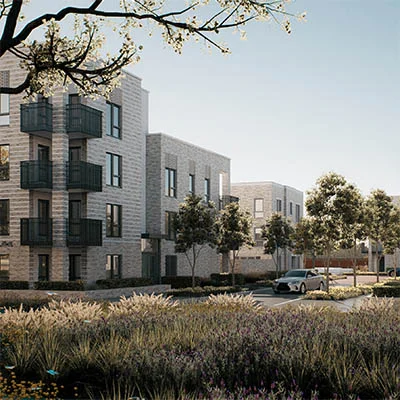
The majority of our work at the moment is across the East Midlands and Cambridgeshire, where we’re working on a range of residential developments for housebuilders and land promoters. It’s a particularly rewarding area to work in because many of the projects are shaped by detailed design codes and a strong emphasis on creating places with a sense of character.
Those projects challenge us to think creatively while balancing the commercial realities of development.
As a practice, we’ve also made a conscious decision to pursue more design-led projects. They play to our strengths, give our team greater opportunities to be creative and ultimately allow us to deliver better outcomes for our clients. That’s the type of work we’re increasingly known for and it’s an exciting direction for the business.
Please tell us about your team.
One of the things I’m most proud of is the team we’ve built. We now have 28 people across our Northampton and Newark studios, bringing together architects, technologists and designers with a broad range of experience across the residential sector.
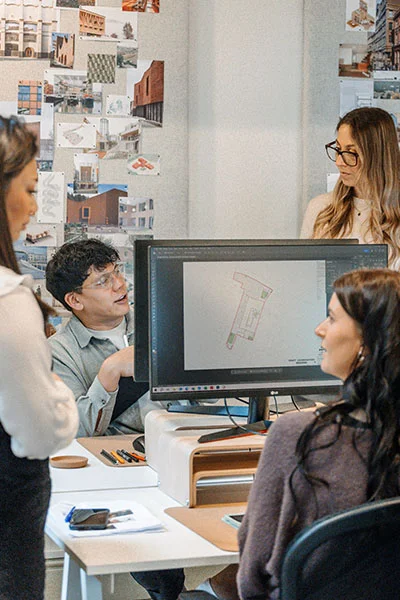
Growing the practice isn’t just about numbers, it’s about skills and people development too. Earlier this year, our associate director, James, joined the practice, bringing extensive experience in Purpose-Built Student Accommodation (PBSA) and we also now have practice leads in BIM, regeneration and urban design.
Developing people is just as important to us as winning new work. We actively support apprenticeships, mentoring and professional qualifications, and we’re committed to giving people the opportunity to progress their careers.
Where do you think the biggest disconnect still exists between great design and getting projects built, and how do you bridge that gap in your own practice?
Great design only succeeds if it can actually be delivered. One of the biggest challenges we see in the industry is that design, planning, technical delivery and commercial considerations can become disconnected, with each discipline working towards different objectives.
We’ve always tried to bridge that gap by involving the right people at the earliest opportunity. Listening to our clients, planners and consultant teams allows us to understand the constraints before we become too attached to a particular solution.
For us, successful residential design is about creating places that people genuinely want to live in while remaining commercially viable and technically achievable. That balance between creativity and practicality is where we believe we add the greatest value.
Has there been a project that fundamentally changed the way you approach housing design?
When I was working as a design manager for a contractor, I was given a scheme that already had planning permission, but it simply wasn’t commercially viable. It had numerous challenges – a 22-metre level change, archaeological remains requiring extensive excavation, significant retaining structures and a number of technical challenges.
The consented design itself was lovely, but it was too bespoke for a volume housing development. There were too many variations, an excessive number of windows and architectural details that added cost but not value.
After reviewing the scheme, we submitted a number of Section 73 applications and refined the design to make it more efficient, while retaining the original design intent and the quality of the placemaking. In doing so, we saved over £3million in construction costs. I learned so much on that project and it’s where the founding ‘design to build’ principle of 24/Three came from.