As developers, suppliers, buyers and renters all look towards a low-carbon, or even carbon-free, future, self-generation is receiving more and more attention. But is there more involved to really help households cut down their bills as well as their carbon consumption?
Jordan Brompton, co-founder and CMO of myenergi, explains how state-of-the-art eco-smart tech is helping households to maximise self-consumption of renewable energy, saving costs and cutting carbon in the process.
With energy bills at record levels, inflation rates soaring and the UK experiencing the most severe cost of living crisis for more than 50 years, the cracks are beginning to show. Households are under enormous pressure, not helped by the volatility and unpredictability of the wholesale energy market.
But rather than remain beholden to mains supply, the country is seeing a shift towards self-generation and higher demand from buyers for new homes to be equipped for a carbon-free future. Recent insight from Solar Energy UK found that 130,596 PV panels were mounted to the rooftops of UK homes last year, almost the same volume as total installations from 2019, 2020 and 2021 combined.
What’s more, sales of heat pumps, domestic wind turbines and other microgeneration technologies are rising rapidly, representing a step-change in consumer behaviour. It seems that renewables are quickly becoming the popular solution to helping consumers take back control.
A plug and play solution?
The continued rise of domestic renewables is a hugely positive movement, with accelerating demand further reducing installation costs. According to Solar Together, a single PV panel can now cost as little as £350, with a typical 4kW system (typically able to provide sufficient annual energy for a family of four) able to be purchased and installed for less than £6,000.
But while renewable energy generation technology might seem like the silver bullet, it still has limitations. Free energy is a huge hook, but the peaks and troughs are unpredictable and lumpy. What’s more, most homeowners are out of the house during periods of high generation and use most energy during low periods.
As such, it’s not unusual to see users exporting surplus energy to the grid and buying it back (at a far more expensive rate) when they need it most. If generation is not managed properly, this future-proof solution to alleviate reliance on mains supply may not deliver the expected benefits.
But there are simple and user-friendly solutions that can help. Thanks to continued product development and extensive investment from across the supply chain, the picture is changing.
Self-consuming self-generation
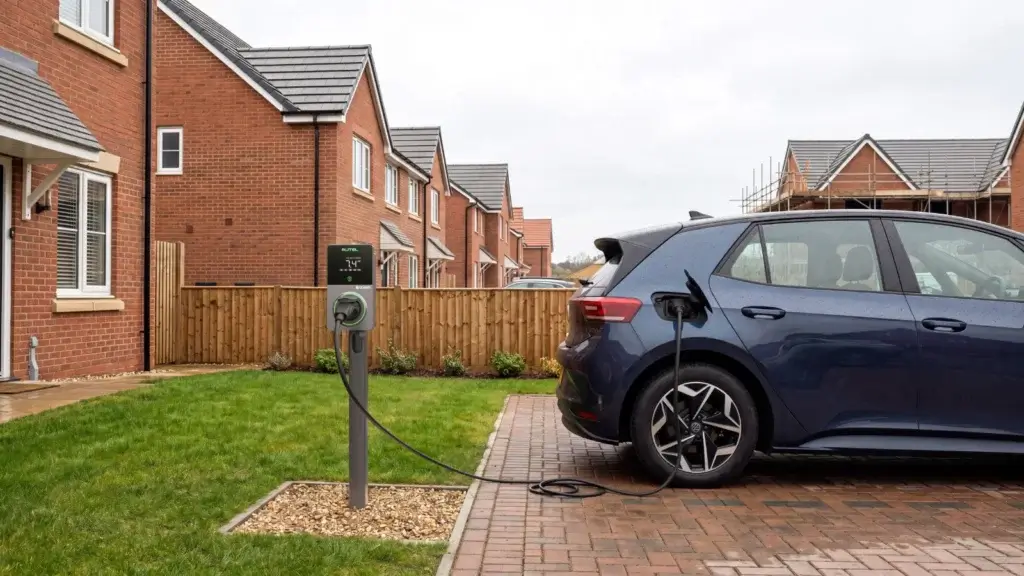
Self-consumption tech allows households to harness up to 100% of the green energy generated through renewables. This includes products like myenergi’s EV charger, zappi, which alongside operating as a mains-connected charging device, can also integrate with renewables to harness self-generated energy. In essence, it lets consumers charge their electric vehicles for free.
Significant investment has been made into other smart products that help householders maximise their renewable energy self-consumption. The myenergi eddi is our state-of-the-art eco-smart power diverter, designed to help households save money and save energy.
Rather than exporting surplus electricity back to the grid, eddi redirects extra power to a designated heating appliance, meaning homes can be heated using 100% renewable energy. Already installed in thousands of properties all over the world, eddi demonstrates the real-world potential of eco-smart energy diversion. A pioneering product for the homes of tomorrow.
For households with solar and a heat pump, eddi offers unique versatility. When panels generate low volumes (<1kW), eddi will automatically divert solar to heat water – preventing the purchase of grid energy and self-consuming self-generation, rather than exporting it. We call this low generation trickle charging.
Once your solar reaches 1.4kW, eddi will divert power to your heat pump instead, ensuring maximum efficiency. Every second, eddi makes intelligent decisions about how and where energy can be most effectively used around the home, switching between heat appliances dependent on the amount of generation and the heat of the water at any given time.
Tackling energy costs and supply security head-on
Products like these highlight how advances in consumer tech are breaking down barriers to renewable adoption. While the benefit of reducing carbon emissions has always proven a huge hook, the demand for solutions to offset volatile energy prices is seeing the sector soar.
On its own, microgeneration has a key role in the transition to a lower-carbon future. With self-consumption technology, however, you can make your energy go further.