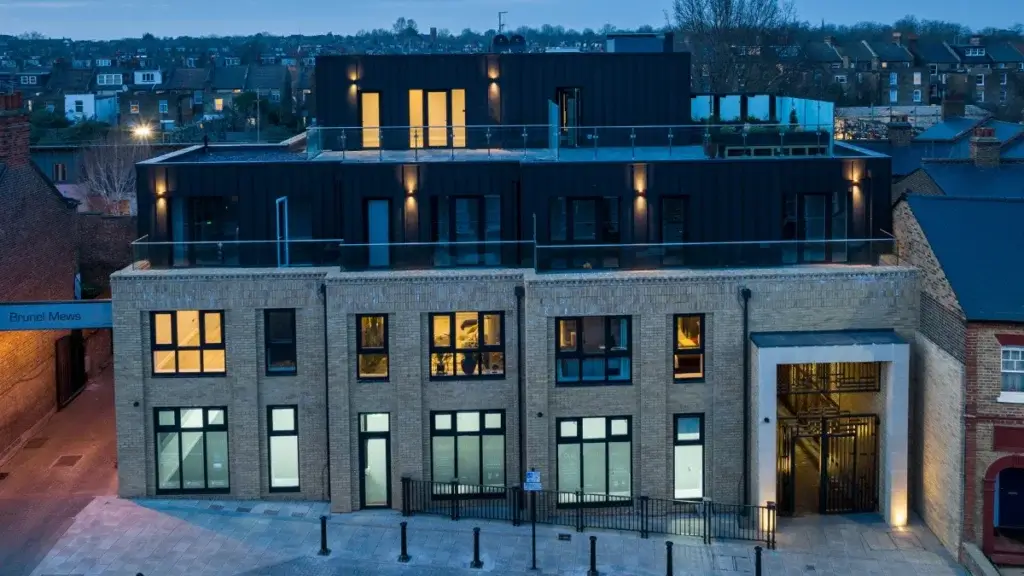

Jonathan Smart, land director at Fruition Properties explains how, with a strategic approach, airspace development can provide a cost-effective solution to help tackle the housing shortage.
Everyone knows we don’t build enough homes and the situation is particularly acute in London where affordable housing is scarce. A report commissioned by the GLA in 2022 highlighted an eye-watering funding gap of £19billion, or £3.8billion annually, to meet the city’s affordable housing targets.
The research was supported by a steering group of the UK’s major Registered Social Landlords (RSLs). The study revealed that the average funding available per affordable unit was £232,000 but the average all-in cost (including a proportion for land) was £451,500. Leaving a significant shortfall of approximately £220,000 per unit.
Airspace development, which involves adding one or two storeys on top of existing buildings, is often proposed as a sustainable solution to the housing shortage. However, these projects typically have higher base delivery costs compared to traditional developments due to their complexity, making them seem less economically viable for affordable housing.
Moreover, airspace projects involve various stakeholders, including freeholders, resident associations, and tenants, often with different tenures, and must also overcome complex structural, legal, and technical challenges.
The urgent need for affordable housing is compounded by the necessity to repair existing social housing. A report by the London Housing Directors’ Group in December 2023 highlighted poor social housing standards in London. 57% of national cases of damp and mould are in the capital and £4billion is required to meet the Decent Homes Standard and EPC Band C as 43% of London’s social housing stock, (circa 343,000 homes,) is below one, or both, standards with additional inflationary pressures on repair and maintenance budgets and legal disrepair cases rising.
It is when you consider these broader social housing needs together that the true value and potential of airspace development becomes apparent. The benefit of affordable airspace is not only held in the free land and the additional units created but also in improvements to the existing building which can be undertaken at the same time, upgrades such as roof replacements, lift installations and enhanced fire safety measures.
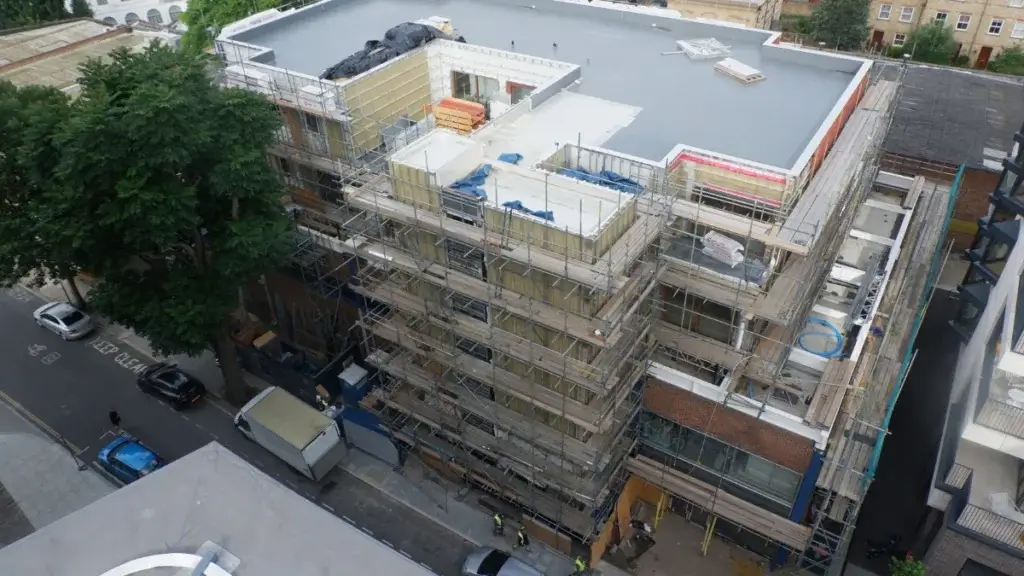
With over 11 years of experience in the airspace sector, and a founding member of the Association of Rooftop and Airspace Development, we are adept at identifying synergies to see what work we can bring forward in a project. For instance, any airspace development work requires full scaffolding around the building, so what improvement and maintenance works can we undertake while this is up? Guttering, external repairs, window replacement to name but a few.
These costs are then deducted from the long-term preventive maintenance requirements. By incorporating maintenance works into the development delivery of affordable airspace projects, the funding gap can be significantly reduced, saving both money and inconvenience for residents—essentially, achieving ‘two birds with one stone’.
One of our recent projects in North West London exemplifies this approach. The delivery of six airspace apartments plus a windfall unit in the estate is funding over £1.25million worth of renovation works including new communal flooring, replacement lifts, electric vehicle charging points, improved fire protection with the installation of emergency lighting, smoke detectors and AOVs. By employing the same contractor for other Section 20 works, the project has also achieved further cost synergies on repair and maintenance works, which would have otherwise been funded through the service charge paid by leaseholders. Without the need for market-level profit for a private developer, even more essential works could be completed.
Despite the complexities of airspace development, the additional savings from future cost reductions and social benefits, such as improved building safety and enhanced quality of the built environment can positively affect residents’ mental and physical health, means it must be considered holistically. In our view, airspace development can address both the need for new affordable units and repair our existing stock, which is no small task but requires big thinking.
Fruition Properties and ARAD believe in collaborative efforts with all stakeholders. We aim to work alongside the GLA, local councils, and major RSLs to deliver affordable airspace solutions, assessing the need of each social block in London and finding ways to create high-quality low-cost affordable units. This approach utilises buildings already in public ownership and addresses the refurbishment works of blocks simultaneously.
This requires pooling relevant funding and fostering joined-up thinking across local and central government departments to understand the bigger picture. We just need to bridge this gap first!