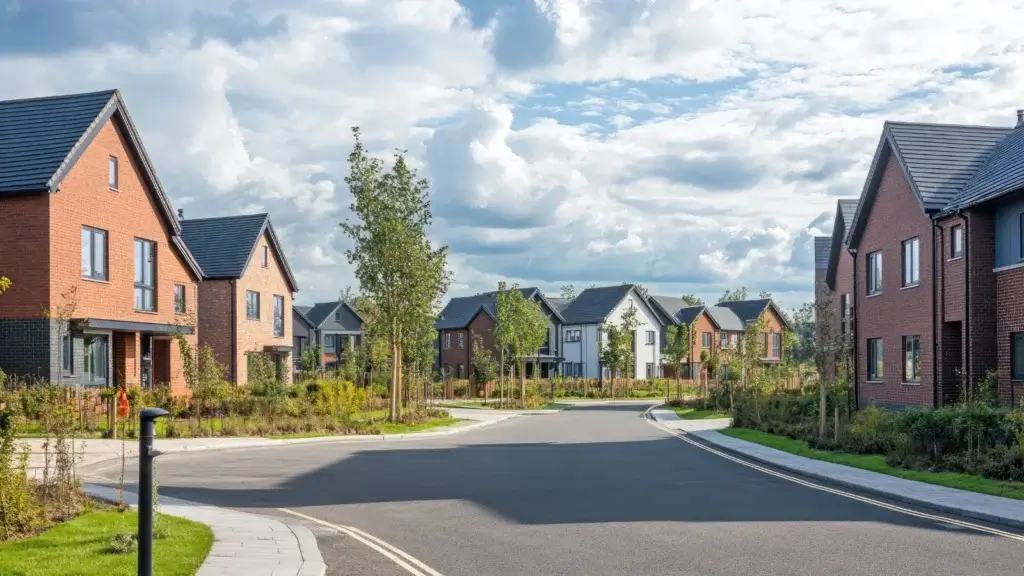

Simon Cox, MD of Walter Cooper, explains why the human impact of housebuilding needs to be at the forefront of plans, and not just an afterthought.
It has been two years since Labour came into power, and the debate around development and housing targets is nowhere near running out of steam. Reforms to the planning system, new legislation and the need for affordable homes are driving the housing agenda, but on a local level, placemaking and quality design are still the biggest priorities.
Often overlooked in housebuilding calculations is the human impact – and this is where the real value is delivered. The right to a safe, warm, comfortable home is the reason why development exists, and yet the outcome can feel like the last consideration, not the first. Research analysed from the Millennium Cohort Study (MCS) found that more than two-thirds of Gen Z are still living at home with their parents. At the same time, more than 130,000 households are stuck in temporary accommodation, 15% of which are living in unsuitable nightly lets like B&Bs and hostels.
Real people are in need of secure places to live in across all tenures. Translate this to housebuilding, and the refusal of just one 150 unit scheme, for example, means that 150 less homes are available to those who need them.
Housebuilding has always been a numbers game. Profit is king, and we count value in pounds and pennies. From the cost of land to the number of units that can be built, to biodiversity net gain credits and community and infrastructure contributions, if any of these numbers don’t stack up, it can hugely affect whether a scheme is perceived as valuable.
The challenge then is not just getting new homes built. The real consideration is deciding how to build them, and where, and ensuring that they serve existing communities and newcomers. It stands to reason, then, that the process of agreeing the future of schemes must be collaborative amongst the human beings with a vested interest. In a nutshell: who gets to decide how land is used?
Property development is notorious for the often-conflicting desires of its stakeholders. There are the landowners, who are responsible for the initial supply of land, sometimes with existing planning consent. There are also local residents to contend with, who will be affected by the changes to their area, will be buying homes, and using the facilities and amenities that development brings. As the guardians and stewards of local areas, they often feel that they should have a greater input into how land is developed.
Developers are another important contributor to this conversation. They have a duty of care over the schemes being built, and are responsible for the design and quality of the homes being built, but they are also held captive to profit margins. Another factor is land owners, who are responsible for the provision of land in the first place, and often sell with stipulations or outline consent.
Planning offices have a greater degree of control over which developments are approved, and have a hand in shaping how these should look. They will naturally work with developers and local residents to ensure that the homes and infrastructure being created are of both a high quality and address local need. However, many local authorities are influenced by the views of anti-development councillors, and as a result their powers have been reduced over the course of this Government to encourage housebuilding.
All too often, however, the planning system reduces human perspectives down to objections and approvals, NIMBYs and YIMBYs. A fundamental lack of trust between stakeholders means that while each invested party is behaving rationally, they are only able to operate within their own constraints. When these complex views brush up against each other, the outcomes can be suboptimal, or even adversarial.
It is only by bringing these voices together, listening to local views and the expertise of the industry, to work towards a shared goal of genuinely great placemaking and the creation of quality homes that people can be proud of.
The government has invested an immense amount of time, effort and money to streamline the planning process, and rightfully so, to give less value and weight to the naysayers, and instead encourage genuine collaboration and positive voices in the mix.
Early engagement with communities is vital to earning their trust. Getting people on board with a project is a huge undertaking, but by reframing proposals around outcomes, not just units, is the only correct path to a people-first approach to housing development.