
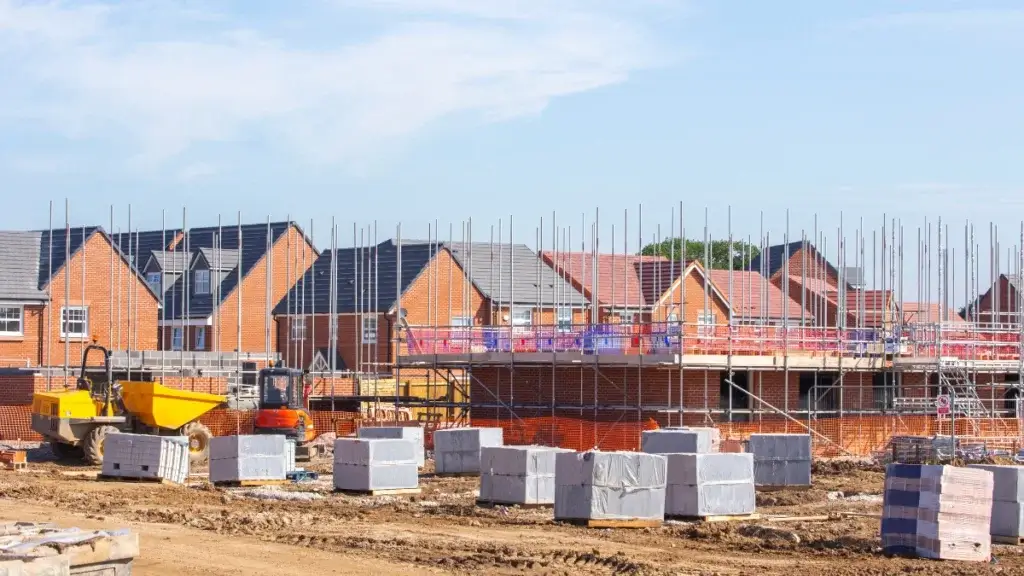
Glenigan has reported an uptick in construction in its May Construction Review, with detailed planning approvals rising by 8%. It also saw a 29% increase in main contract awards and a 22% uplift in project starts.
However, it warns that the positive figures could be deceiving, with year-on-year comparisons showing a 54% drop in detailed approvals, main contract awards down by 11% and project starts falling 17%.
The May Construction Review focuses on the three months to the end of April 2026, providing a comprehensive analysis of construction data.
Glenigan says that the data highlights how the UK construction sector remains stuck in the woods with little current direction to guide it out, and that the industry’s trajectory will continue to be shaped by wider economic and policy developments.
Glenigan’s economic director, Allan Wilen, said: “Whilst this encouraging uptick will come as some relief after months of decline, the sector must not risk falling into a fool’s paradise. The true impact of the US/Iran War is yet to be felt and, if it’s anything similar to previous major global events, then the aftershock will ripple through markets, causing disruption well after the conflict, hopefully, comes to an end. An early resolution of the current impasse and the ending of the Strait of Hormuz blockade would start to rebuild investor confidence and ease pressure on the construction industry.”
“However, last week’s King’s speech provides some clarity to latch onto and, once the Downing Street shenanigans have died down, a degree of certainty may return to help get us back on track. There are windows of opportunity in niche areas which savvy contractors are already involved in, or starting to wake up to. So, whilst the outlook remains overcast, it’s not a time to stand and stare, but to seize opportunity where it exists to weather the current climate and be ready for the sunshine when it eventually arrives.”
Residential construction largely remained level during the three months to April, with project starts dipping just 2% year-on-year, while main contract awards climbed 9% and detailed planning approvals jumped 17% on 2025 levels.
Quarter-on-quarter performance was even more upbeat, buoyed by major projects coming to the fore. Social sector housing saw the strongest performance, accounting for 51% of starts and rising 236% year-on-year, however, private housing and private apartments fell by 45% and 56% respectively.
Glenigan says that the wider outlook is finely balanced: Nationwide reported a 3% lift in house prices, while Halifax noted a dip amid geopolitical uncertainty, and both will likely shape residential construction in the months ahead.
Regionally, Yorkshire & the Humber led the charge, with project starts powered largely by sizeable social housing heating works in Leeds. London also enjoyed a strong run, cementing its status as a key residential market. Elsewhere the picture was patchier, with the South East, East Midlands and Scotland all sliding back against the previous year.
Non-residential construction saw mixed results during the period. Project starts of office schemes rose by 217% year-on-year on the back of an 868% rise in major schemes worth over £100million. Detailed planning approvals climbed 30%, though main contract awards slipped 57%. Hotel & Leisure also saw positive figures, with planning approvals leaping 80%, even as starts dipped 3% and awards fell 29%. Health saw approvals rise 32%, hinting at a pipeline gathering pace despite a 39% drop in starts. Retail, Education & Industrial were broadly muted, while Community & Amenity saw numbers fall, with starts down 60% and contract awards dropping 83%.

