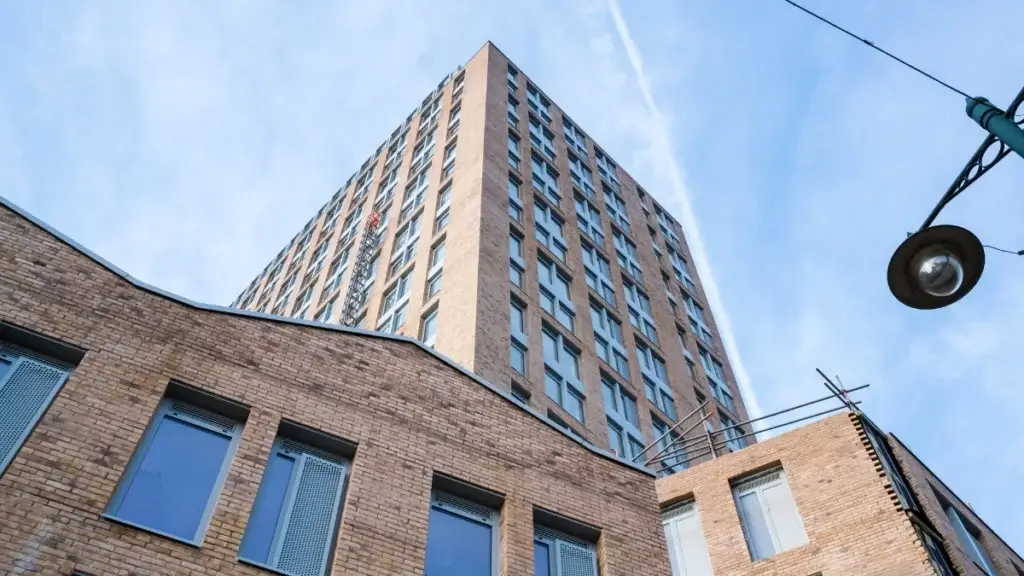
The Building Safety Regulator has introduced an external remediation improvement plan aimed at increasing the speed of essential higher-risk building (HRB) safety works across England.
The improvement plan introduces several measures, including:
- a dedicated taskforce: a new external remediation multidisciplinary team (MDT) will mirror BSR’s existing Innovation Unit’s success by streamlining communication and processing through dedicated account managers
- reduced caseloads: a recruitment drive to increase regulatory lead capacity, reducing individual caseloads from an average of 25 down to a more manageable level of circa 10 to the benefit of both applicants and BSR processes
- flexible approvals: using ‘approval with requirements’, where appropriate, to allow projects to start safely while work continues to resolve any distinct technical issues
- new guidance for external remediation with further supporting information and resources over the coming months, aiming to help the industry to overcome challenges in the building control process for existing buildings
The BSR says that around 40% of ongoing external remediation applications rely on government funding. While late 2025 and early 2026 applications are showing an improved picture, a high percentage of complex, older external remediation cases are taking longer to make decisions on. It also suggests that the BSR’s caseload is being caused by internal resource constraints and a high volume of older, non-compliant industry submissions.
To address this, the BSR plans to model its new external remediation MDT on its Innovation Unit, which has been handling new build projects since September 2025.
This team will be supported by external remediation account managers. These will release capacity for technical regulatory leads by handling communications with applicants and addressing any portfolio concerns.
The BSR will also look to pilot the use of building control professionals from different classes to support case officers and regulatory leads, with the aim of helping manage and significantly reduce workloads by allowing regulatory leads to focus on work that can only legally be carried out by them as direct employees of the BSR.
The BSR has also announced plans to improve its engagement with applicants, moving away from purely written communication. This includes initial meetings for more complex projects and encouraging direct contact between the MDT and applicants to clarify issues faster.
To manage the flow of work, BSR will develop and publish a clear external remediation prioritisation structure. This will help to address frustration among applicants who are unsure of where they sit in the assessment process.
The BSR also says that incomplete applications are responsible for causing a significant portion of delays, often due to a lack of basic technical information or documentation.
This includes:
- insufficient evidence of fire-resistant properties for replacement cladding and related materials, for example, membranes, including assurance that products are available on the market that fulfil the required design or performance specifications
- lack of structural loading calculations, this includes wind loading, load transfer methods and confirmation that the building can support the new cladding design
- insufficient explanation or evidence for cavity ventilation provision in external walls to prevent moisture build-up that could damage building fabric
- incomplete demonstration of thermal performance (U-values) of the new cladding system
To address application issues, the BSR has published initial external remediation-driven guidance, and will publish further improved feedback, resources and support targeted at these applicants over the coming months.
This will include advice for applicants on unique challenges such as non-worsening provisions, gaps in existing HRB information and thermal performance.
By December 2026, the BSR is aiming to reduce average decision times for remediation applications to less than 12 weeks, with an aim to achieve approval rates of over 65%. This is still above the statutory milestone of eight weeks but will be a significant improvement on turnaround times for remediation applications.
Lord Roe, BSR board chair, said: “We continue to accelerate our decision-making for new build applications, speeding up approvals for new build and external remediation projects and increasing the supply of safe new and existing homes through the recent changes we have made to our processes.”
“However, we recognise current determination times for remediation cases are falling short of statutory targets. This plan represents a targeted and achievable package of measures to reset the system and clear older legacy remediation cases.”
“By doing so and then focussing on more recent applications, we can ensure high-rise residents see essential safety improvements they deserve without unnecessary or further delays.”
Charlie Pugsley, acting CEO of BSR, said: “As we enter an important new chapter as a standalone regulator, our focus is on strengthening safety, rebuilding trust and supportively collaborating with industry.”
“Collectively these measures will ensure current and future remediation applications can proceed as smoothly and quickly as possible.”
“By launching a dedicated multidisciplinary team and introducing account managers, we are dramatically increasing our capacity to make faster decisions.”
“But speed cannot come at the cost of safety. We will also publish further specific guidance and support to help industry submit higher-quality applications, ensuring thousands of residents can feel safe, and are safe in their high-rise homes.”