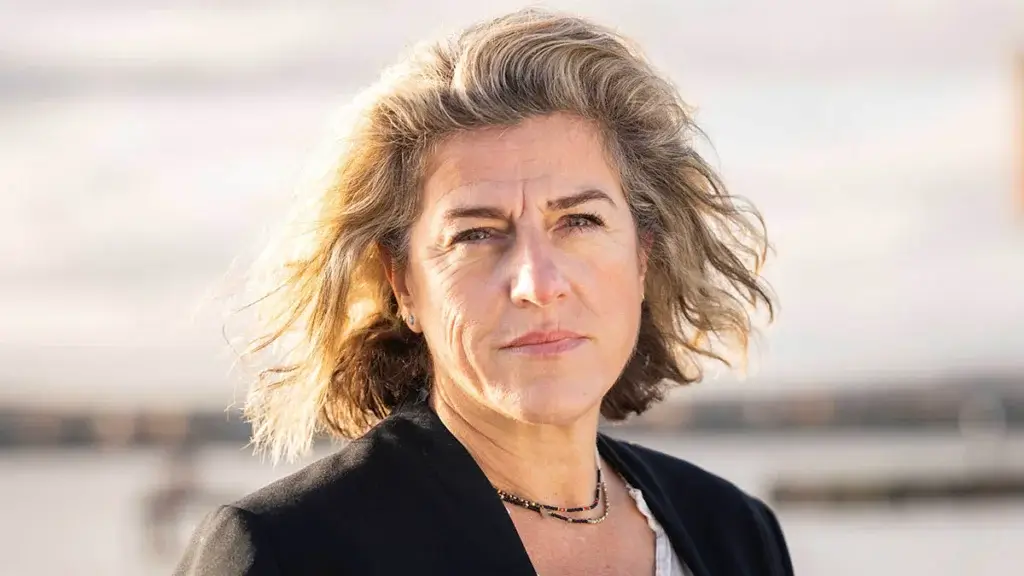
With Women in Construction Week well underway, and International Women’s Day being celebrated this weekend (8 March 2026), Leigh Johnson, MD of Barking Riverside Limited, speaks to us about her successful career and inspiring more women to woring in the sector.
Please tell us about the career path to your current role.
My role at BRL is a culmination of everything I have learnt so far across the development industry – an incredibly exciting opportunity that packages my previous knowledge and experience. I came into the built environment via a youth training scheme straight from school, joining a small architects and engineering practice. This gave me hands-on experience of how buildings and places come together – before moving into some of the big PLCs. Land-led design work really captured my interest, taking me into planning and pre-development, which I focused on for over a decade.
I’ve always been naturally inquisitive, always looking over the fence and asking, ‘What does that mean?’ and ‘Could I do that one day?’ I now realise every previous project, role and leader has influenced my philosophy on place and people.
The large-scale multi-phase sites I worked on naturally led into placemaking because the emphasis was often on holding a vision and then owning the responsibility to implement it. Owing to this, I now understand and appreciate what is means to be a true master developer, with Barking Riverside capturing this complexity and opportunity. My role as managing director of BRL is ideal… it’s almost like I planned it!
My advice for anyone in this industry is you have to be open and adaptable. Yes, you can plan but be prepared to tear that plan up if it is not having the intended impact for the project.
You must work and deal with many motivated and successful women – but is the industry still struggling to attract a greater proportion of talented females?
I’ve never worked anywhere with so many women in senior roles as I have here at BRL. In fact, women outnumber men on the Exec team, and senior women in the business as a whole make up 62%, which would have been hard to imagine a few years ago. Many of them are primary carers. As the saying goes, if you want to get something done, ask a busy woman.
Sometimes I look at other companies and their boards and think, if there’s not one woman on that board, what does it feel like lower down? Having no female representation might put me off engaging with a company.
There’s undoubtedly been huge positive change in the last 10 years. However, now’s not the time to stop pushing; it’s essential both women and men keep supporting and cheerleading females in the sector.
Have you had inspiring role models or mentors?

I’ve found a real cohort of women who are professional, strong, outspoken and incredibly supportive of other women in the industry. It often feels like osmosis, the way people reach out to you and connect with you. We all suffer from imposter syndrome from time to time, and my network of women are my go-to in that situation.
I was lucky to work with some inspirational women at Homes England, for example, Alison Crofton, Sophie White and Kelly Hillman. They’ve become my sounding boards, peers and friends – the people always on the other end of the phone, helping me solve an issue over a dog walk or whilst I’m doing my weekly shop. What’s even better is that they all have a skill set that complements my own, so our discussions strengthen one another’s work. They are always so generous with their time and their expertise.
Promoting diversity isn’t just the responsibility of women; men also have a huge part to play in championing women. I’ve had some amazing male bosses too, who gave me full autonomy and saw people for their strengths irrespective of gender. I have always appreciated that level of trust and freedom, and I feel lucky to have experienced this.
What are the achievements of which you’re most proud?
I’m proud of the breadth of projects I’ve been involved in, particularly when I’ve been trusted and therefore given the freedom to flex and pivot in order to deliver the right solution for homes and placemaking.
That moment when you see those homes being lived in – families unloading shopping, children on the swings after school – it cuts through all the technical processes we went through and all those hours of negotiation. That’s what I’m proud of, the fact I get to play a part in community life.
Are there networks women can be part of to help fulfil their ambitions?
There are lots of groups people can be part of. The WISH (Women in Social Housing) network is a really positive and welcoming space. It’s diverse and not limited to people working directly in social housing.
Most large companies, such as legal firms that work in property, are very supportive of networking events and groups. There are also smaller ones, more low-key, where you can attend intimate sessions of 30 or 40 people at a time. Here you can have conversations and chat to people outside of your organisation.
Formal spaces are great, but you also need your own informal networks – your own cohort of friends and colleagues that allow real conversations and connection, whilst learning by osmosis.
Have you been inspired by International Women’s Day?
International Women’s Day is definitely an inspiring day to step back and look at how far women have come in the sector. We need moments to celebrate those champions who have helped lead the way.
Earlier in my career, I recall seeing the work of Zaha Hadid, who was really one of the first high-profile women in the architectural field. Her attitude was outspoken and she was incredibly driven. She had this sort of chutzpah that we could all learn something from.
As a mother to a teenage girl, I’m now even more mindful that we all need to get better at celebrating the achievements of women – to pave the way for future generations.
Are there challenges and opportunities in residential development and placemaking you’re particularly interested in?
Residential development and placemaking is all about stakeholders, people and engagement. We’re creating places as an industry, but at the end of the day it’s not us that will live here. We have an obligation to not be subjective, and to ensure decisions are informed by the existing and future community that will inhabit the place.
Whilst there are amazing men and women across the sector who champion place-creation, I do believe that women uniquely understand this ethos of collaboration and realise that you can’t do it all on your own. Women are much more open to asking for help, asking ‘How do we do this? How do we work through this together?’. This is both with peers and partners, but also with local communities. Women listen, engage, diffuse situations and bring people and actively seek multiple perspectives. That gives us a real opportunity for women to change the perception that development rides roughshod over what came before it.
I think there’s a softer skill revolution coming in the industry – and it’s led by women.
A joint venture between L&Q and the Mayor of London, Barking Riverside Limited is the master developer behind Barking Riverside, one of Europe’s largest and most exciting new neighbourhoods.