In the fast-moving world of marketing technology, just where should your marketing spend go? Ginetta Vedrickas asks the experts.
Even a self-confessed Luddite may grudgingly accept the digitalisation of the new-build homes market, with 3D visualisation and AI technologies fast becoming the norm as the property-buying experience undergoes a long-overdue and much-needed transformation.
“The traditional way of searching for and buying property is long-winded, inefficient, and uninspiring. With 3D and AI technologies, it’s the exact opposite – intuitive, dynamic, and tailored to the buyer’s needs. These innovations don’t just simplify the process; they transform it into an engaging experience, giving housebuilders a competitive edge and buyers the confidence to make smarter decisions, faster,” says Peter Orr, CEO of Intelligent Mobile.
Orr says that housebuilders that embrace these innovations will not only meet evolving buyer expectations but can position themselves as leaders in a dynamic, rapidly changing market. As proof, he points to the build-to-rent sector where he sees these kinds of tools “redefining how buyers discover and engage with properties” and he believes technology offers transformative opportunities for housebuilders in 2025.
The UK’s population is increasingly digitally savvy, demanding immersive, interactive home-search experiences, says Orr: “Advanced tools like 3D development tours and AI-powered search not only meet these needs but also help housebuilders stay ahead of the competition and capitalise on growing demand.”
Orr points to a 2024 survey of housebuilders that found that 97% of buyers find 3D visuals more engaging than traditional 2D plans; 76% reported increased enquiries and engagement, while 59% using 3D development tours experienced faster sales.
“Full 3D development tours give buyers, especially those purchasing off-plan, a realistic understanding of locality, layouts, views, and the best available properties, boosting their confidence and enabling faster, more informed decisions,” says Orr.
Instant property matching and streamlined search experiences from AI-driven chatbots and search tools are transforming how buyers find new build homes, resulting in faster sales, higher conversion rates, better cross-sell opportunities, and enhanced buyer satisfaction.
Greystar is setting the benchmark for digital innovation at its Greenford Quay development, where pioneering 3D virtual tours and AI search tools enhance engagement and decision-making, explains director of digital experience Ben Parkinson: “Greenford Quay continues to lead the build-to-rent sector by introducing 3D solutions, becoming the first UK residential scheme to offer an immersive shopping experience with this technology. This aligns with our vision to revolutionise property search, making it more engaging, intuitive, and efficient.”
Proptech certainly moves at pace, and 2024 saw Classic Folios and Spaciable take major strides with the latest evolution of its digital service, Spaciable Living, which tags itself “the most comprehensive property management and resident engagement solution on the market.”

Chief operating officer Julia Mardell has watched the industry suffer numerous setbacks over the last five years but is optimistic: “The prospect of a year of settled government, a continued gradual fall in interest rates and changes to planning processes offer enough green shoots to suggest the UK property market will continue to recover.”
Plans for a single mandatory consumer code and the industry’s growing receptiveness to technology have prompted the optimism and the company believes that it is now “extremely well-placed to support developers and housing providers with their resident experience needs,” says Mardell.
“The introduction of a single mandatory consumer code, which has been approved by the government, would require all homebuilders to meet certain standards from marketing and sales through to completion and aftercare,” says Mardell, who adds that there are currently several consumer codes within the industry, registration with whom is voluntary. “As an accredited supplier of the government-backed New Homes Quality Board, we are well-positioned to support homebuilders when the mandatory code comes into effect, helping them comply with its requirements.”
Spaciable Living harnesses the latest AI capabilities to create maximum efficiency for housing providers, which can be “exciting, but overwhelming,” accepts Mardell. Spaciable offers support on best practices, futureproofing against technological developments, while still delivering on-brand customer care and this year will see the company expand Spaciable Living’s functionality as it works with clients, providing onboarding and training, as well as ongoing support, and incorporating any new features they may suggest, creating a more bespoke experience.
“Housing providers can save considerable time managing their developments, reduce overheads, improve site safety and security, and reduce complaints regarding issue handling, whereas residents can engage with their surroundings, book shared spaces, connect with neighbours and self-serve important information relating to their home, thereby increasing referrals, renewals and customer satisfaction. Spaciable Living is a one-stop shop, but it is certainly not one-size-fits-all,” says Mardell.
In the competitive and evolving world of property marketing, housebuilders are increasingly turning to the latest advancements in marketing tech to stay ahead, says EyeSiteView associate director Tony Buck: “We see the role of digital tools and immersive experiences as pivotal, not just for selling homes, but for understanding and engaging with today’s homebuyers.”
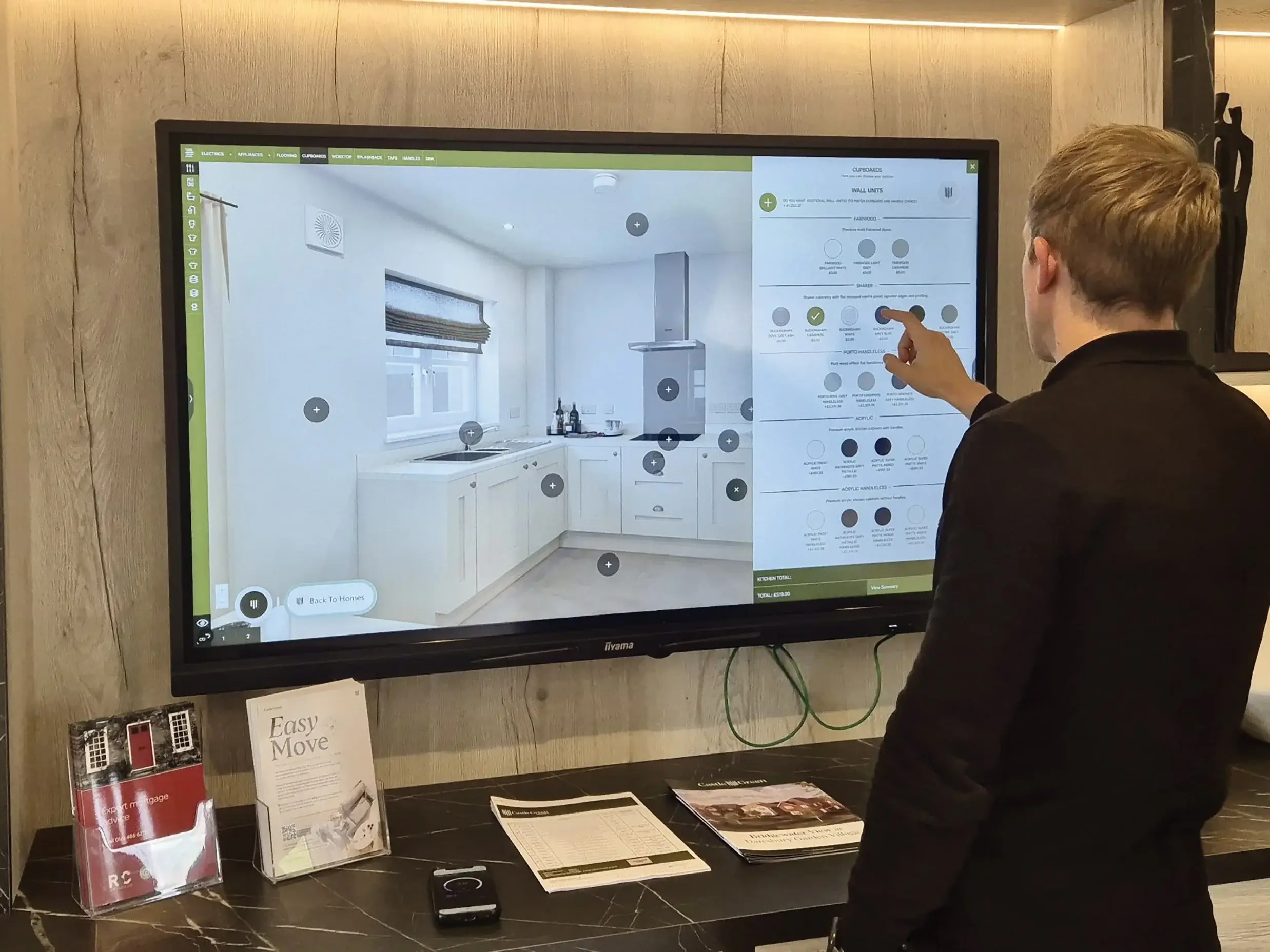
Buck says that the company’s Housetype Configurator is a prime example of how technology is reshaping the homebuying journey: “Either at home on the sofa, or during an appointment with a sales advisor, this online tool allows homebuyers to visualise and design every room of their future home, exploring photorealistic CGI representations of available upgrade options, from kitchen worktops to flooring choices.”
EyeSiteView client Castle Green Homes has seen a significant uplift in specification upgrades since using Housetype Configurators, says Buck: “Evolving how customers choose, document and pay for their upgrades is driving higher engagement and upsell opportunities.” Buck adds that, for sales and marketing teams, the benefits go further: “Every interaction with the Configurator generates rich data insights, revealing customer trends and behaviours including which upgrades are most popular, how preferences vary across developments, and which products are most profitable. These analytics empower housebuilders to fine-tune their marketing and sales strategies with precision, saving time and resources while delivering what buyers truly want.”
Buck predicts further innovation for the sector as AI integration becomes a defining trend: “I’d go as far as saying that strategic investment into AI is essential in 2025 to stay ahead. If you can’t implement it with existing resources, align yourself with an agency that can help. Imagine AI-powered digital assistants, that are perfectly trained to recommend available properties based on a buyer’s preferences. Then imagine being immersed in a virtual guided tour around your exact property before it even exists. Well, we live in this world today and this technology has the potential to reduce manual work, enhance buyer engagement, and streamline operations.”
He warns, however, that adopting AI isn’t without hurdles; trust remains a concern: “Some stakeholders are wary of relying on automated systems, fearing a lack of transparency or potential errors in critical decisions. This hesitancy can delay adoption and limit the full utilisation of AI’s capabilities. Finally, the high upfront investment in technology and training often poses a barrier, especially for smaller developers who may not see immediate returns.”
EyeSiteView works closely with clients to address challenges, offering solutions that simplify data preparation, build trust through transparency, and demonstrate the long-term value of AI-driven tools, says Buck: “At EyeSiteView, we’re proud to partner with a range of UK housebuilders, both at a national and local level. We’re helping them transform their approach to property marketing and achieve outstanding results. Together, we’re shaping the future of how homes are sold in the UK.”
ANTLER’s director Simon Jenns also sees challenges ahead: “The landscape is evolving faster than ever, and, as an industry, we need to be ready to adapt and, most importantly, innovate. At ANTLER, we’re fully embracing this evolution.”
Acknowledging short attention spans, Jenns’ mission is clear: “Create entertaining, punchy content that stops people in their tracks, or ‘scrolls’! With every year, our audience’s attention span becomes shorter, and traditional content no longer holds the same power in a digital age. This is why we’re doubling down on the need for bold, dynamic approaches that drive engagement. In 2025, I believe it’s time for brands to take risks.”

ANTLER’s content strategy is firmly rooted in the digital-first approach. Video remains one of the most powerful tools to engage today’s consumer, but it must be entertaining and impactful, warns Jenns: “Audiences use social media to escape the realities of life or to be entertained, but we’re seeing advertisers ignore this and serve the same old traditional approach to content on these platforms.”
Uncertain times bring opportunity, says Jenns, who believes that now, more than ever, is the moment for housebuilders to approach marketing differently. ANTLER recently partnered with TAUK (The Agency UK) to introduce a fixed-fee property marketing service tailored specifically for housebuilders. Flipping fixed-fee services on its head, the new service offers housebuilders access to major property portals and websites at a fixed, transparent price point of £1,099, designed to revolutionise the way housebuilders connect with buyers.
“For far too long, the property marketing world has been dominated by complex pricing structures that are often opaque and difficult for developers to navigate. With housebuilders’ marketing budgets stretched further than before, our goal is to make property marketing simple, transparent, and cost-effective, and that’s exactly what we’ve done with TAUK.”
“As an exclusive referral partner for TAUK, we’re excited to be able to offer our clients a new way to get their properties in front of the right audience, all while maintaining simplicity, affordability, and maximum impact. As we move into 2025, ANTLER is committed to delivering creative solutions that empower brands to navigate an unpredictable market. Many pundits will have a stab at guessing the year that lies ahead, but I am confident that with bold ideas, strong partnerships, and innovative content, we can support housebuilders to achieve strong sales rates whatever the market throws at us.”
According to Land Registry data, the financial year 2023/24 recorded the lowest number of property sales in the past decade. So, asks Stel Tzirki, managing partner of The Media People, where does this leave the property market? “With mortgage rates stabilising, the current conditions favour buyers. They have the luxury of time to find the right property without the usual pressure of being outbid.”
It’s a different picture for housebuilders, he adds: “The landscape is less favourable. The market is seeing a drop in leads, longer transactional periods, and limited opportunities to push for higher pricing. As the bottom-of-funnel activity declines, developers need to adapt their strategies to navigate this evolving market.”
Tzirki points to insights from The Media People’s data and insight team revealing the pivotal role of parental support in helping first-time buyers step onto the property ladder. Gifting from parents has reached a record £9.2billion, supporting an estimated 335,000 property purchases in 2024.
“This financial assistance underscores the critical role of family contributions in offsetting affordability challenges and deposit requirements. The Media People- through data and research- are focused on understanding the nuances of the market and adapting with agility to generate more leads for developers.”
Looking ahead, Tzirki sees few surprises for the coming year, with hopes pinned on increased development activity and a return to market stability: “For property developers, the next few months present an opportunity to rethink strategies, focusing less on a dwindling bottom-of-funnel market and more on awareness campaigns at the top of the funnel. Attracting new buyers through strategic media efforts will be key to reigniting demand and setting the stage for future growth.”
Today’s buyers want a fast-paced, engaging experience, and automotive and housebuilding industries are beginning to meet that demand, explains Alicia Powell, Movin Technology’s account director: “In 2025, instant service has become the norm. Whether through social media, messaging, or online shopping, we as consumers expect to get what we need quickly and effortlessly, and expectations have now shifted to bigger purchases like homes and cars.”
Powell notes that leading brands, such as Redrow, Cala, Lovell, BMW and Audi, already use a messaging platform in their developments and dealerships to send personal videos and imagery to their customers, meeting the expectations of today’s world, but she warns that, for sales teams, the right tools are required to communicate with buyers simply, quickly and safely.
“Movin Technology meets these needs with a secure, corporate-branded messaging platform that sales teams can rely on, maintaining GDPR compliance to ensure customer and staff data is managed responsibly.”
Beyond technology, Movin provides ongoing support, regular check-ins, and tailored guidance to help housebuilders maximise their investment. Training programmes, webinars, and refresher sessions help teams to achieve best results. Interactive features such as call-to-actions, review buttons, and image links encourage engagement and streamline the customer journey. Real-time tracking allows teams to act on sales opportunities promptly, monitoring open rates, play counts, and CTA responses. For leadership, the platform provides full visibility into messaging activity, ensuring consistency and oversight. ‘One-to-many’ messaging capabilities further simplify communications for newsletters, marketing, and event promotions, helping housebuilders reach broader audiences.
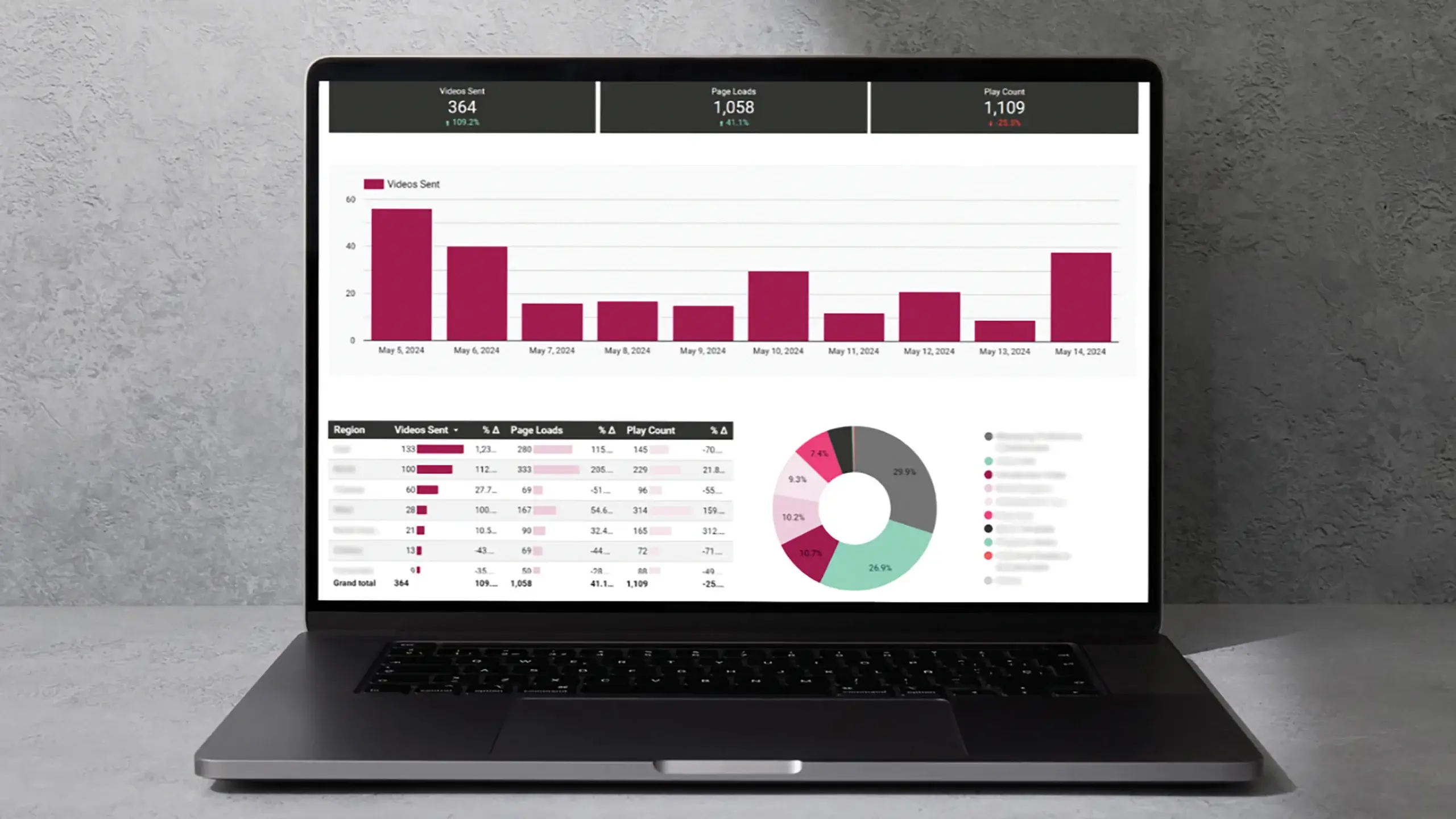
“Movin Technology provides a modern solution to meet the growing demands of today’s housebuyers, offering speed, security, and exceptional service,” says Powell. “Customer expectations are evolving, with a growing demand for personalised and transparent service. Virtual tours and interactive messaging are becoming increasingly popular, allowing developments to share information in a way that is tailored to each customer, strengthening relationships, improving satisfaction, and driving sales.”
The digital revolution also helps quash fears that prospective buyers often have when buying off-plan, says Steve Foreman, managing director of The Property DriveBuy: “For many buyers, purchasing a property off-plan can feel like a leap of faith. They can’t walk through the property or see how it will look in reality. The Property DriveBuy helps overcome this barrier by giving buyers a clear, detailed view of what they can expect. With earlier and better access to property details, potential buyers gain confidence in your project and are more likely to commit early.”
Acknowledging “fierce competition” among housebuilders and property developers, Foreman says off-plan developments are a key driver of early interest and investment, but warns that, without the right platform to showcase them, they can go unnoticed.
“The Property DriveBuy ensures your projects get the attention they deserve by offering an immersive experience that captures potential buyers’ interest from day one,” adds Foreman, who says that the platform, along with displaying floorplans and site layouts, helps buyers visualise their future home in a realistic setting via interactive 3D models, video tours, and detailed site maps, which promotes faster, more confident decisions.
The new DriveBuy facility is already proving popular, says Foreman: “Picture this: instead of waiting for site visits or physical show homes, potential buyers can ‘drive by’ your future development sites virtually. The Property DriveBuy uses intuitive technology to map out developments, allowing prospective buyers to see exactly where properties will be located and how they will fit within the community.”
Foreman says that the facility means no more waiting until a site is fully accessible or building costly onsite show homes: “With The Property DriveBuy, your future homes can be made viewable digitally at the very earliest stage of planning. This not only helps boost early sales but also provides a way to pre-sell units and lock in buyers, minimising financial risk.”
Adgenda Media International’s (ami) operations director Toby Wilson predicts that 2025 will be challenging: “Mortgage costs are still high, Bank of England rate cuts are slower than expected and, while inflation is falling and things are ticking along, confidence in the property market is still low. The upcoming stamp duty threshold change could stimulate activity but that could be muted by high mortgage rates and extremely high prices.”
Wilson calls the imbalance of supply versus demand “a significant problem” and, despite government pledges, he doesn’t forecast “quick wins”. He sees today’s buyers rejecting off-plan purchases in favour of finished stock, which elongates the sales cycle, therefore complicating financing for housebuilders. He also warns of a challenging international market, with fewer south-east Asian investors, and existing investors who expect unrealistic discounts.
In response, he adds: “Media agencies, such as ami, must stand up and support their clients with accountable and data-driven strategies that are smart and justifiable.” Describing ami as a “strategic, results-driven, independent media agency”, Wilson reassures clients that its focus is on delivering ROI based on commercial objectives, while also taking time to understand corporate brand strategies.
“We are agile and evolve our service offering via the development of proprietary technology for the benefit of our clients. The property sector is embedded in our DNA, and we have partnered with many of the UK’s most prestigious developers, agents and housebuilders to achieve their long-term business goals. However, we also operate across numerous other sectors so are able to cross-pollinate ideas, tactics and executions across industries.”
Alongside partnership, data science and accountability are the main pillars on which ami operates, hence its investment in tech, alongside its own platforms, IP, products and services to ensure efficient campaigns. Wilson, who sees AI as “the most significant field”, adds: “What makes our approach unique is how we weave AI into every aspect of campaign planning and execution. From creative optimisation to advanced analytics, our use of AI is designed to deliver results while aligning with the unique objectives of our clients.”
He believes that technology needs smart people to get the best out of it and human intuition to turn it into something valuable for clients: “Ultimately, AI isn’t just a tool; it’s a strategy. By embracing its potential, we are futureproofing our clients’ marketing efforts by efficiently targeting the right buyers and maximising the value of every campaign.”
As a property marketing agency specialising in digital experiences for housebuilders, DCTR believes it is “uniquely positioned with both CGI visualisation and design teams in-house,” as managing director Tom Durrant explains: “This integration in our studio enables us to create seamless buyer journeys that transform how potential homeowners interact with properties.”

Digital platforms allow for the telling of immersive stories about people’s future homes in ways that traditional marketing materials simply can’t match, but the fear remains that AI and the digital journey can’t equal more human experiences. Durrant reassures: “Through interactive elements, micro-animations, and even carefully curated sound design, we can create emotional connections that static PDFs could never achieve.”
Durrant views the new homes sector as at a crucial turning point. “While the industry has traditionally leaned heavily on functional, fact-driven marketing focused on spec sheets, deals and urgency, we’re seeing a clear need for more emotional storytelling. Trust isn’t built solely on facts and figures; it’s built through authentic connection. When you think about the people you trust most, they all share one thing: genuine emotional resonance.”
Looking ahead, Durrant predicts a significant shift towards more experiential property marketing: “The rise of proptech is democratising access to sophisticated marketing tools, but the real challenge isn’t technological, it’s creative.”
He sees many housebuilders falling into what he calls the “dullness trap” – using sophisticated tools to deliver the same uninspiring messages: “The result? Marketing that fails to differentiate or create meaningful connections with potential buyers, despite the advanced technology behind it.”
To combat the industry-wide challenge of marketing dullness, DCTR is launching BRCK: Live this March in central London, in partnership with Global Street Art and Property House, a free event on 20 March featuring Adam Morgan, author of The Cost of Dull, which Durrant calls “a groundbreaking white paper examining how bland marketing directly impacts product performance”. Durrant invites interested parties to contact him directly: “Through panel discussions and keynote presentations, we’ll explore how the property sector can break free from conventional marketing constraints and create more engaging, emotion-driven campaigns.”
Simon Whale, Kerfuffle’s ‘chief Kerfuffler’, believes that discussing technology invariably includes mention of AI: “What’s fantastic though is that what AI has meant to most of us has been around content creation and, in the vast majority of cases, ChatGPT; while that has been tremendously impressive in its own right, it’s the fluffiest part of what AI is going to be delivering to businesses going forwards.”
He believes that AI support around automation, data and trend analysis around customer service tools is “mind-blowing”, while putting benefits in the content creation space to shame, but adds: “Remember you’re not just being benchmarked against your competitors you’re being held to what the likes of Uber, Amazon, Deliveroo and a multitude of ecommerce businesses are giving them the rest of the day. That may seem unfair, but it’s a fact of life.”
The sector is on “the cusp of a digital transformational wave,” believes Whale: “And, famously, you want to be riding that wave rather than caught underneath it, but where do you start? As ever though, there’s lots of shiny stuff concerned around this and you need to dig a bit deeper to find the tools that are actually going to deliver proper ROI rather than add yet another piece to your tech stack that really just turns it into an unstable tech Jenga pile.”
This year, Kerfuffle acquired a business called Unissu which covers over 10,000 proptech suppliers around the world to determine potential use: “It’s not finding the AI that’s the issue it’s about ensuring that it can be honed to your own particular part of the market.”
Sympathising with housebuilders navigating their way through tech, he admits that, even in his sphere of expertise, finding worthwhile products is a challenge: “Our role has been sorting the wheat from the chaff and, unsurprisingly, our AI guides were the most downloaded resources we provide over the course of last year.