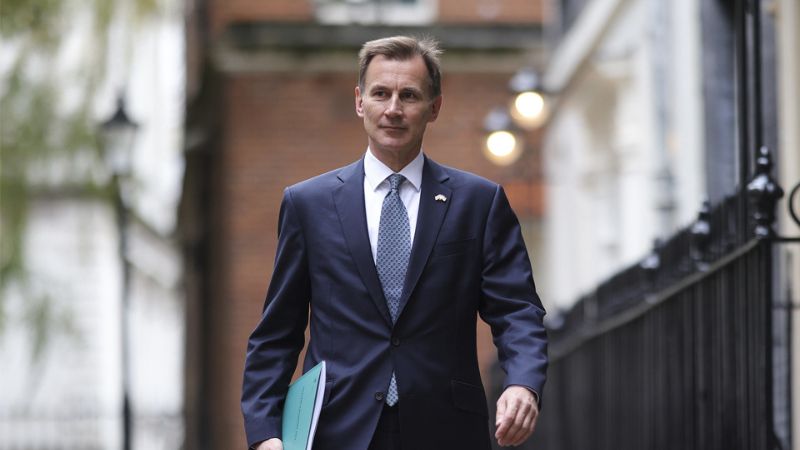
Jeremy Hunt announced his Autumn Statement today, citing the need to make “difficult decisions” before outlining the government’s plans to save £55billion over the coming years between tax rises and spending cuts.
A lack of commitment to planning reform and to tackle the housing crisis will no doubt do little to allay concerns of the housebuilding industry, although Hunt did, however, announce that the Stamp Duty cuts will be extended to 2025, and social housing rents will be capped at 7%, an increase from the expected 5%.
Read the full article about Jeremy Hunt’s Autumn Statement here
Here’s how the industry reacted to the Autumn Statement:
Steve Bangs, chief executive officer at Pegasus, the creator of later-living quality homes and communities, said: “Today’s Autumn Statement has put pressure on the personal finances of almost everyone across the UK in the name of balancing the books. Although we welcome confirmation of the pension triple-lock and additional funding for social care, numerous tax threshold freezes will have a rippling effect up and down the country for the majority, including the extension of the inheritance tax freeze.”
“Thanks to rampant house price inflation, the IHT freeze means that more homeowners are at risk of breaking the £325,000 tax-free allowance when they pass on their homes, leaving them at a financial disadvantage at a time when every penny counts. With the average inheritance tax bill due to hit £283,000 in 2028, it was an opportunity missed to not provide incentives to encourage downsizing, to free up more housing stock and keep the property market moving as a recession beds in.”
Nick Sanderson, CEO of Audley Group, commented: “An £8billion funding injection for the NHS and social care sector will be warmly welcomed by the industry. And while it will help in the short term, we must look at other long-term ways to tackle the fundamental issue of how we care for people as they get older. A commitment to supporting specialist retirement housing which prioritises health and wellness would bring a wealth of benefits, including helping to unplug the housing market as older people will be motivated to downsize and alleviate pressure on stretched care services. Importantly, at a time of financial strain, it doesn’t need Treasury money to happen. Reforms to planning laws that help expedite the building of these integrated retirement communities would do more to drive change than anything from the Treasury coffers. The cross-party housing for older people taskforce was announced early in 2022. This initiative was, and still is, a big step towards solving the overarching problem this country faces in terms of health, social care, and housing and now it must be advanced.”
Melanie Leech, chief executive of the British Property Federation, said: “Businesses across the UK are facing unprecedented cost pressures and we are pleased the Chancellor has listened to the BPF, frozen the business rates multiplier and introduced further reliefs, to help prevent a tide of insolvencies on the high street. Many high street businesses have been paying artificially high rates bills for years and the Chancellor has recognised this is simply not sustainable.”
“The government rightly remains committed to levelling up and delivering the homes we need across the country and we are pleased to see the retention of investment zones. The BPF has been working with a number of local authorities to develop a model for Town Centre Investment Zones and we look forward to sharing our work and building on it with the government.”
“The reforms of Solvency II have the potential to unlock further institutional investment but we need to be bolder in creating new models for public-private partnership and investment if we are to deliver local infrastructure and transform town centres whilst tackling climate change.”
“Moreover the lack of necessary investment in local authorities and continued uncertainty about planning reform are a fundamental risk for the government’s ambitions for levelling up and we hope Michael Gove will address this in his statement later today.”
Nick Leeming, chairman of Jackson-Stops, said: “Reversing the cut to Stamp Duty on properties under £250,000 and £425,000 for first-time buyers is unwelcome news for the housing market. Perhaps one of the only positives to come from the ill-fated mini-budget, the decision to put a time limit on the tax break is likely to create a bottleneck of transactions in the first quarter of 2025 as buyers rush to lock in the more favourable stamp duty rate. Whilst this rush to get a sale across the line will not be to the same extent seen during the last Stamp Duty holiday, this time limit will undoubtedly factor into many first-time buyer’s decisions as these savings could be put towards utility bills, solicitors’ fees or upgrades on the home they purchase.”
“The priority must be avoiding creating market bubbles and providing a stable environment. We should be looking to encourage fluidity throughout the market and a wider Stamp Duty reform is needed for this.”
Lynda Clark, CEO of First Time Buyer Group, commented: “A second budget in as many months, and I can’t help but feel concerned for the next generation of homebuyers who have been swept up in this game of Monopoly. We are seeing an extreme inflationary environment which affects homeowners and renters alike, dramatically cutting down mortgage eligibility across the market and hindering those saving for a deposit while being pummelled with high rental costs. The government’s latest stealth cuts, which include freezing income tax thresholds, mean that people will continue to struggle during this cost of living crisis.”
“If the government can mitigate the impact of the cost of living by keeping downward pressure on inflation, then I remain optimistic that first-time buyers who persevere will be rewarded for their efforts. Homeownership remains a fundamental right and aspiration for young people across this country, and it is imperative that this rite of passage remains open for the next generation of homeowners.”
Victoria Du Croz, head of planning and partner at Forsters law firm, commented: “The government has reiterated its commitment to the growth agenda, intending to speed up regeneration in areas that urgently need inward investment. While the private sector can bring forward plans for new homes, public realm, offices and leisure facilities, local authority budgets will be impacted by today’s statement with councils set to receive below inflationary increases over the next two years, before falling further to just 1% real term increases from 2025. Local authority planning teams are severely under-resourced, lacking both sufficient staff and budget to streamline processes. In addition, the planning system is long and protracted, making it difficult for developers to bring forward proposals with time and cost certainty. Proposals to digitise the planning system may help address community engagement, but will now need to be balanced against budgetary constraints and the ability for local authorities to deliver.”
JLL head of EMEA and UK living research, Nick Whitten, said: “The financial markets have already responded positively to the Chancellor’s attempts to ‘balance the books’ with the cost of debt, and ultimately mortgage rates, falling steadily in the past week. But households are going to feel even more of a squeeze through the current cost of living crisis as a result of the belt-tightening measures introduced in the Autumn Statement.”
“However, we do not see a house price crash occurring in the UK, more of a correction. The next 12 months will see a sluggish market in which buyers and sellers haggle over price and ultimately less transactional activity occurs. The supply of new homes for sale will gradually become constrained.”
“Against this backdrop, JLL is forecasting that UK house prices will fall in value in 2023 by 6% which equates to an average discount of £17,500 from the average UK house price of circa £290,000.”
A spokesperson from the Royal Institute of Chartered Surveyors, said: “RICS is pleased that the government announced its commitment to energy efficiency and decarbonisation in the Autumn Statement, keeping to its promise to reduce final energy consumption from buildings and industry by 15% by 2030. RICS welcomes the announced £6.6billion investment in energy efficiency for this parliament and a further £6billion annually committed from 2025. We hope this funding can reach projects as soon as possible.”
“Energy costs greatly impact prices throughout the economy, particularly the building sector. Establishing efficient use and low-cost energy production is vital for economic recovery, and this recognition is clear in the statement.”
“RICS looks forward to working in partnership with the new Energy Efficiency Taskforce (EETF) and advising it on our recommendations, which include radical reforms to the EPC system and the means to track carbon output throughout the built environment.”
John O’Malley, chief executive of Scotland-based Pacitti Jones, said: “It is imperative that the country’s finances are put on the right track to reduce mortgage rates, which are a key driver of house purchases. The Chancellor has had to make some hard decisions but if the new measures steady the waters, a gradual softening of the market is more likely rather than the hard crash some people were predicting.”
“Of course, less money in people’s pockets due to tax increases will theoretically reduce likely demand but we are seeing some people looking to downsize to save on extortionate energy bills and softening of prices will provide opportunities for first-time buyers.”
“Regardless of what is going on in the world, people will always be aspirational and there may be some who will take advantage of any reduction in demand to trade up to their dream home. Who knows, we may very well even see the return of fixed prices to the second-hand market as people look for stability.”
Stuart Law, CEO of the Assetz Group of property lending companies, commented: “Balancing the books further stabilises the mortgage market, meaning we will now likely avoid the most severe scenarios for house price depreciation, while some buyers may be able to revive their hunt for a new home with relative security that mortgage rates won’t keep ratcheting up. That being said, with inflation still high, a package of tax rises will further eat into household budgets, and this will take its toll, putting homeownership out of reach for more people and bringing house prices down from the historic highs we’ve seen over recent years.”
“Housebuilders will have their heads in their hands as Jeremy Hunt failed to afford any time to planning reform, while the retention of the SDLT cut will protect demand over coming years at a time when a huge imbalance in market forces sits at the heart of our national housing crisis. Until we stop kicking the can down the road, we will never build enough homes, or take steps to make housing more accessible and affordable for more people.”
“Housebuilders and other housing providers will also be deeply concerned that the imperative for government departments to find efficiency savings will mean less public sector investment in the housing sector, as well as planning delays at already under-funded local authorities. Private sector investment in the housing sector will be absolutely essential in the years ahead if we are to fund the new homes that are desperately needed across the country.”
Paul Smith, MD of The Strategic Land Group, said: “The Autumn Statement revealed little in the way of reforms to the planning system or development process. Hopefully, that is a positive sign the government intends to deliver the ideas it already has, rather than coming up with new ones yet again. A promise to scale back Liz Truss’ Investment Zones idea and a re-commitment to devolve further powers to the Greater Manchester and West Midlands Combined Authorities – an idea first floated in the Levelling Up White Paper – exemplify the apparent return to the pre-Truss status quo. What the development industry needs most of all right now is a period of stability and certainty to help weather the economic storms ahead. The announcements today-or lack thereof – suggest the government understands that.”
Lucian Cook, head of Savills residential research, commented: “Any short-term boost to housing activity will be tempered by the wider increase in the tax burden that will put a further squeeze on household finances already under pressure from the rising costs of living.”
“A higher exposure to income tax will be of particular concern for those approaching the end of a fixed rate mortgage deal, who still face a sharp rise in mortgage costs despite an easing in mortgage rates in recent weeks.”
“For buyers, a reduction in net income will have an impact on the level of mortgage they can service. However, the key to what today’s measures mean for the housing market will be the effect on both the expected path of bank base rate and lenders’ margins that will, to a greater or lesser degree, reflect what happens to gilt yields.”
“Over the past week or two, we’ve seen lenders begin to lower their fixed rates and the Bank of England governor has said that he believes the base rate could peak at 4% as inflation settles to a longer-term norm over 2023. This supports our expectation that average house prices will fall in the order of 10% next year but recover any losses by 2026.”
Dominic Agace, chief executive of leading estate agents Winkworth, said: “The property market is built on confidence and all buyers need reassurance that we have a government that is making the right decisions to bring about some stability. We have already seen interest rates coming down slowly and mortgage products returning. The most important result from this Autumn Statement should be action and not hot air. We are facing a new reality and after successive fiscal statements this year, it is vital that the government delivers on its promises.”
“The change to CGT is yet another negative move by successive Chancellors against buy-to-let landlords, many of whom are already leaving the sector due to increased taxation, regulation and rising interest rates. This is an own goal by the government as the private rental sector is the only place many people can find a home if they are not in a position to buy. With the lack of social housing supply and the need for young professionals to be highly mobile, the role of the private landlord is more important than ever and should be encouraged.”
“Homeowners, particularly those in large family homes and living in areas with high levels of council tax will feel the effects of a rise in council tax. This could be deeply unfair on young families, adding to the growing cost of living burdens as they also manage increased mortgage costs. A rise in council tax will combine with the effects of rising energy costs and general costs of living, and could be the catalyst for older homeowners to make the difficult decision to downsize into smaller properties in a lower council tax band and maybe move to an area with a lower council tax levy.”