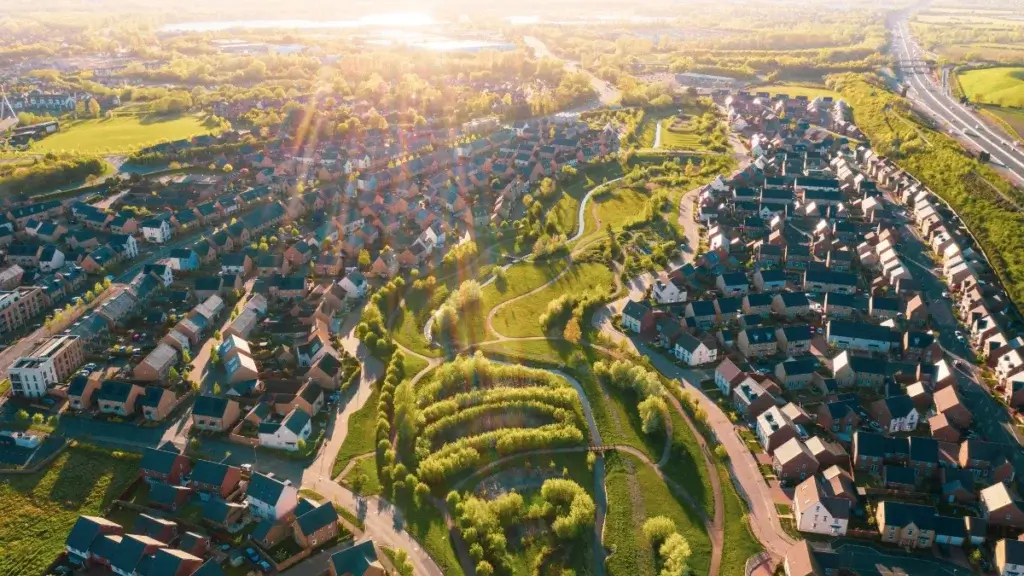
The government has set out new national design guidance for new build developments to set a benchmark for well-designed and well-connected neighbourhoods.
The government says that the new guidance will ensure that new homes reflect modern life, including space to work at home and flexible layouts that adapt as families grow.
It is hoped that councils and developers will use the guidance to make visible improvements for residents, including calmer streets with less traffic to improved green spaces, while new builds will be expected to address and adapt to climate change, creating adequate shade and minimising potential flood risk.
Now in its second iteration, the guidance encourages all parties to support local jobs and amenities by design – ensuring local shops and services like GP surgeries are within walking distance.
As part of its approach to support SME developers bringing forward much-needed homes and to set realistic expectations on larger developments, the government is intending to create model design codes – set to be launched later this year – with clear rules to create successful places.
Local authorities will set the vision for their areas through local plans, ensuring clear design expectations using masterplans, local design codes and guides. The new design guidance aims to provide clarity early in the process to avoid costly delays to schemes and ramp up housebuilding and help deliver 1.5 million high-quality homes this Parliament.
Housing and planning minister, Matthew Pennycook, said: “Exemplary development should be the norm not the exception so that more communities feel the benefits of new development and welcome it.”
“As we act to boost housing supply, we are also taking steps to improve the design and quality of the homes and neighbourhoods being built.”
“These standards will help ensure new homes and neighbourhoods are attractive, well-connected, sustainable, and built to last.”
The seven features of the government’s guidance are:
- Liveability: Homes close to amenities, designed for all stages of life, with communal and private space.
- Climate: Buildings that cope with climate change, green spaces to reduce overheating, solar panels, green and brown roofs and EV charging stations.
- Nature: Hedgehog highways, swift bricks, green spaces and parks and protection for existing natural features.
- Movement: Safe streets, accessible public transport and good parking without car-dominated design.
- Built Form: Rooms sized to promote health and well-being, with good storage, minimising outside noise, privacy and security, sunlight and good ventilation.
- Public Space: well-located spaces that encourage social interaction, with natural surveillance from windows and balconies.
- Identity: Character shaped by local history, culture and landscape, reflected in building types and architectural details.