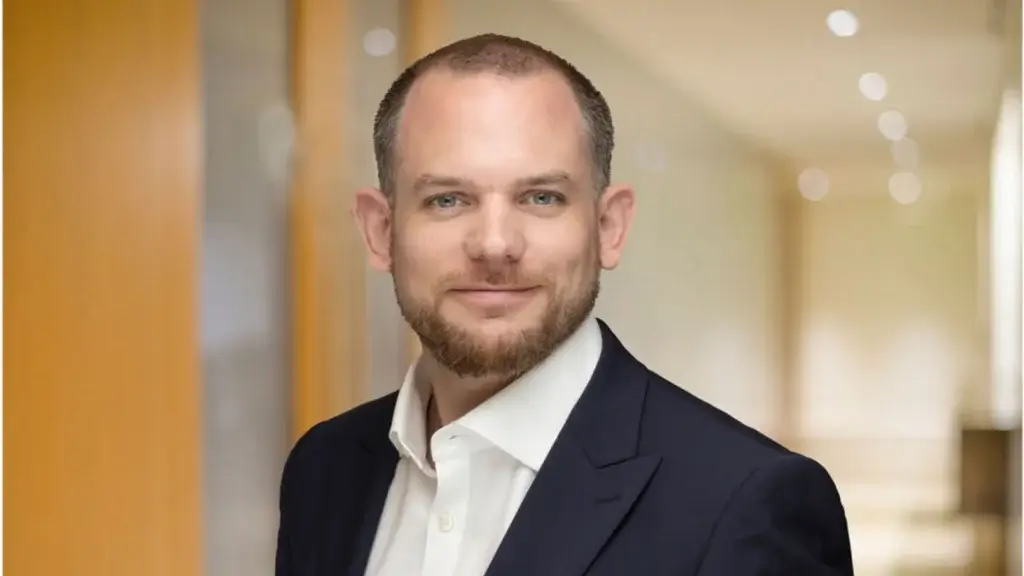
We talk with Sue Riddlestone OBE, CEO at Bioregional, about the journey to her leading role in sustainability in property development.
Hi Sue, please tell us a little about yourself and your current role.
I’m the chief executive of Bioregional, an organisation I co-founded 30 years ago, with the purpose of finding ways to enable us all to live well within the natural limits of the planet and leave sufficient space for nature. What we call one planet living.
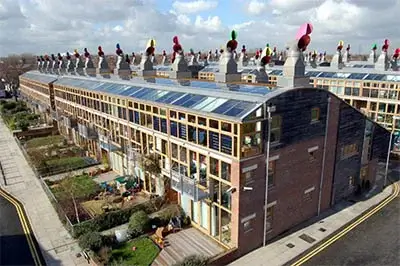
Bioregional initiated and was the co-developer of BedZED (Beddington Zero Energy Development), the UK’s first large-scale, mixed-use sustainable community, comprising 100 homes, office space, a college and community facilities and to this day it remains one of my proudest achievements.
In response to demand after we completed BedZED, we co-created the One Planet Living framework with WWF, a holistic tool based on ten principles to help developers to create sustainable communities which enable residents to live a sustainable life.
We have deep expertise in products, and for 20 years worked in partnership with B&Q, and then their parent company Kingfisher, on sustainable product guidelines for their entire product range, sustainability strategies, and reporting. It’s truly been a transformational partnership!
Today, my team and I work mostly in an advisory capacity with companies and organisations to create sustainable homes, communities, high streets and eco-products and services.
I was also part of the team that created the United Nations’ 17 Sustainable Development Goals and worked on the sustainability strategy for the London 2012 Olympic and Paralympic Games.
Where did your career in sustainability begin, and have you seen career opportunities within your sector grow in recent years?
I was motivated by wanting to find solutions for our modern way of life to reduce the negative impact we were, and are, having on the natural world, especially loss of ancient forests and our impact on marine life. So, I set up a local Greenpeace group, and started studying the issue in my own time. The first book I read was Small Is Beautiful: A Study of Economics as if People Mattered by EF Shumacher. Still very relevant! I wanted to create a green business, but also wanted to help bring about a wider change in society. I co-founded Bioregional as a charity 30 years ago. We used to be the go-to people in a limited field of expertise, but today every company has to be addressing sustainability, and it’s a fantastic and rewarding career option.
You deal with numerous UK housebuilders and developers – should they create more in-house career opportunities in sustainability matters?
There are already a lot of in-house sustainability opportunities in the sector, but I do believe it needs to be driven by the C-suite representatives, with buy-in from the board. That way, those in sustainability roles can make a real difference, drive positive change and feel they are being supported to do so.
What is it about your role that you find most satisfying?
That we aren’t just discussing sustainability and getting to Net Zero – we are putting it into action. Then through the work at Bioregional and my role at the Future Homes Hub and industry coalitions, we can spread the word that it can be done – is actually a lot simpler than the sector thinks – and see the sector gently transform in the way it needs to.
You’ve worked on several overseas projects – are there great similarities and/or differences between working in the UK and working elsewhere in the world?
The whole process is very similar, but the biggest difference is the role of national and local governments, especially in countries like China and the US.
For example, a project I worked on in China wouldn’t let the company export renewable energy to the grid, as at the time it was against the law in China. That has changed and we are seeing China charging ahead now. A project in the USA, only last year, was having similar issues.
Years ago, when sustainability wasn’t as widely talked about, we would travel globally to work on projects in Australia and China. But today, it’s usually lighter touch and far more digital, which means we can support from afar and reduce our travel emissions. We are now reviewing their plans and providing consultancy. In general, the whole sector has become more informed.
Do you have a favourite project you’ve worked on?
It has to be BedZED. We were able to completely express and deliver this project exactly as we envisioned it. For us, it’s the project that just keeps on giving and continues to inspire. Even though the technologies have changed, and we might do some things differently today – especially regarding technologies and materials, which have evolved over the last few years – there’s still so much to learn from and be grateful for in this project, which inspired the One Planet Living framework.
Your OBE is a recognition of your achievements – have you maintained a good work/life balance while earning such an award?
The work is so inspiring and motivating, but I also recognise that there’s a limit to the human body. I have learned to take holidays and work the given hours. Years back, it was a different story, and I worked around the clock, but I wouldn’t recommend it, save that for the odd occasion!
At Bioregional, we have joined the UK’s second pilot of reduced working hours for the same pay, and we have been trialling a nine-day fortnight as part of the National four-day week campaign since May.
It’s so important to have a work-life balance. For me, I want the team to have downtime and time with their families which also, happily, makes for a more creative, energetic team.
If someone is considering a career in helping create sustainable places to live, are there any best first steps they should take?
It depends on what you’re good at and what inspires you. Qualifications aren’t as important as passion, understanding, and what sustainability means for our built environment.
I would say to anyone thinking about a career in creating sustainable homes and communities then get out there and start visiting inspiring and leading projects in this space across the UK, attend the conferences and find out what’s going on. There are also lots of networking events you can get out to.
Also, think about what it means to live sustainably and work out your own footprint, you can use the free global footprint network calculator online to help you do this.
Find areas that you would like to specialise in and see them as your opportunity. You make the friends and connections that will lead you to opportunities, and that doesn’t always involve studying.