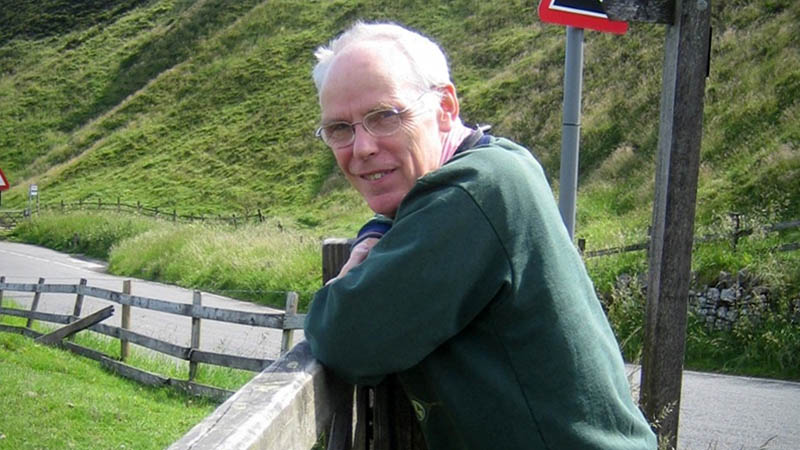
We speak to Julian Bicknell about what has led him to a successful career in architecture.
What initially made you want to study architecture?
There were architects in my family, a grandfather in South Africa and an uncle in Cambridge. Despite these family precedents I left school intending to study engineering. I switched to architecture at after my first term at university.
Were you always interested in historical architecture?
I was very lucky as a child to travel all over the Mediterranean. My father was a diplomat and both my parents were passionate sight-seers. I had visited the historic sites of Athens, Rome and Istanbul in their stimulating company before I went to secondary school.
You studied architecture at Kings College Cambridge. How much do you think the architecture of that city influenced you?
I was born in Cambridge and spent much time with my uncle’s family there, since my parents were abroad. The city was my second home and its architecture was very familiar.
What are the challenges involved in interpreting historical architecture?
Architecture of all sorts speaks for itself. It should not require interpretation or explanation to make its mark. However, to understand historical architecture as a designer, you have to imagine the world in which buildings were made in the past – the craftsmanship, technology, fashion, politics, etc. of the times – all very different from our modern world.
What architect either living or dead do you admire or find inspiration from?
Frank Lloyd Wright is the supreme architect of the recent past – with his unique combination of practicality and originality. For classical design inspiration I look to the great English designers between 1660 and 1820: Christopher Wren, John Vanbrugh, Nicholas Hawksmoor, James Gibbs, Thomas Archer, John Soane – among many others.
What design sensibilities do you have that you bring to every project?
The key sensibility is that of being able to envisage how clients and others will inhabit the finished buildings and how they might react to them.
What has been the biggest influence on your career?
The first five years of my working life as apprentice in the office of Edward Cullinan. Ted was both a remarkable architect (he was awarded the RIBA Gold Medal in 2008) and a gifted teacher, treating all his staff as equals and requiring us all to think for ourselves as well as working as a team. He was passionate about construction and the social art of building.
What is your dream project?
Every project is a sort of dream – starting as a whirl of exciting imaginings and coalescing in the course of the design to something finite and concrete – realising the dream.
You’ve worked on a wide variety of projects over your career – how do you choose a project?
In reality few architects have the luxury of choosing projects. The projects choose us; and each successful project then leads to others. I have been very lucky in the succession of projects I have been asked to work on. They have steered my career starting with work on existing buildings (some of some historic importance) towards the new buildings in historic styles that have become my stock in trade.
How has digital technology changed the way you work?
I started work before digital technology was available to designers. All our drawings were made by hand – from the first design sketches to coloured perspectives and detailed contract drawings. I continue to work almost entirely in hand drawings, relying on colleagues to develop the computer-generated drawings that are now essential to efficient working with the building industry. CAD has made the all sorts of things possible, that, as little as twenty years ago, were not. Our oval house at Arragon Mooar on the Isle of Man, for example, could not have been built without computer-generated drawings and computer controlled machining of parts.
What advice would you give to young architects today?
When I switched to architecture at university, I got a long letter from my grandfather urging me never to forget hand drawing – the same advice that he had received from his mentor, Sir Herbert Baker in the 1900s. Fluency and confidence in drawing are essential to making those dreams of ours into reality. Fifty years later my own advice to young architects is the same.
How has the Covid-19 virus changed the way you work?
I disbanded my office in Richmond at the end of 2016, but have continued to work from my studio at home, communicating with colleagues by e-mail and the internet (in a way that would have been impossible not long ago). So my pattern of work remains largely unaffected.