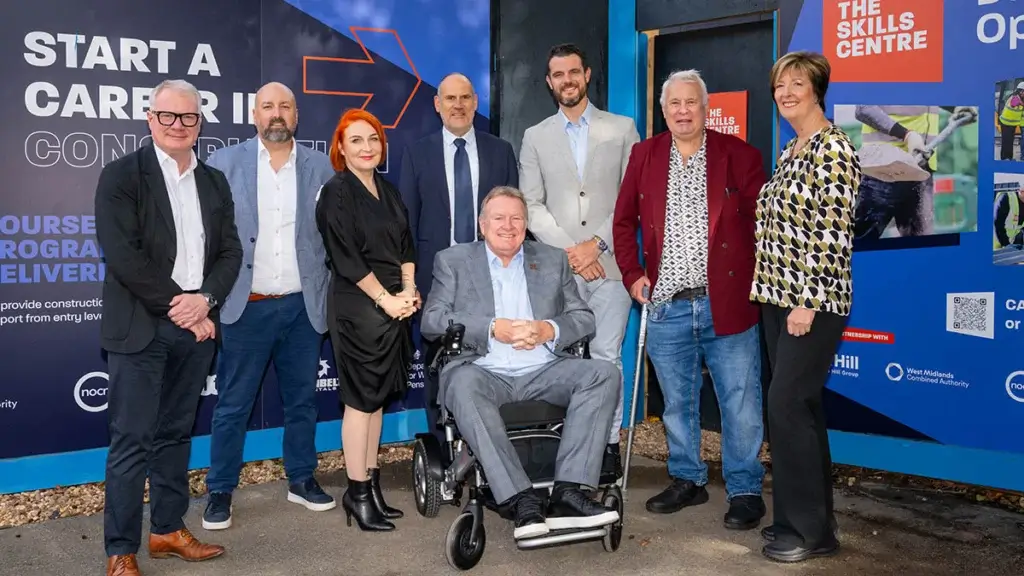
Securing the best future talent is a key policy but it’s vital to maintain career support and development long after that, says Chris Dowling, future talent & organisational development lead for Vistry Group.
It’s clear that this is an area that Dowling is very passionate about: “I’ve led on future talent in construction for three years, but prior to that I was in financial services for about 10 years. So it’s really interesting coming into a new sector.
“There are two main parts to my role – I lead on future talent (FT) and organisational development (OD). On the future talent side of things, this is about building pipelines and skills that the business needs now, but also what they will need in the future. I think too frequently there’s a focus on now, but actually we know that there are so many factors that need to be addressed across the macro and micro environment, from artificial intelligence to modern methods of construction. We need to be trying to build those capabilities now.
“I lead on our graduate trainee and apprenticeship programmes, as well as training for anyone internally who wants to upskill. This could be through the apprenticeship levy, or through educational sponsorship. And then also the full life cycle. This is from when colleagues join the organisation, their induction all the way through to when they roll off programme, as well as the creation of new programmes, and workforce planning. So it’s not just ‘let’s bring them all in’. It’s a case of what we’re going to do with them afterwards.
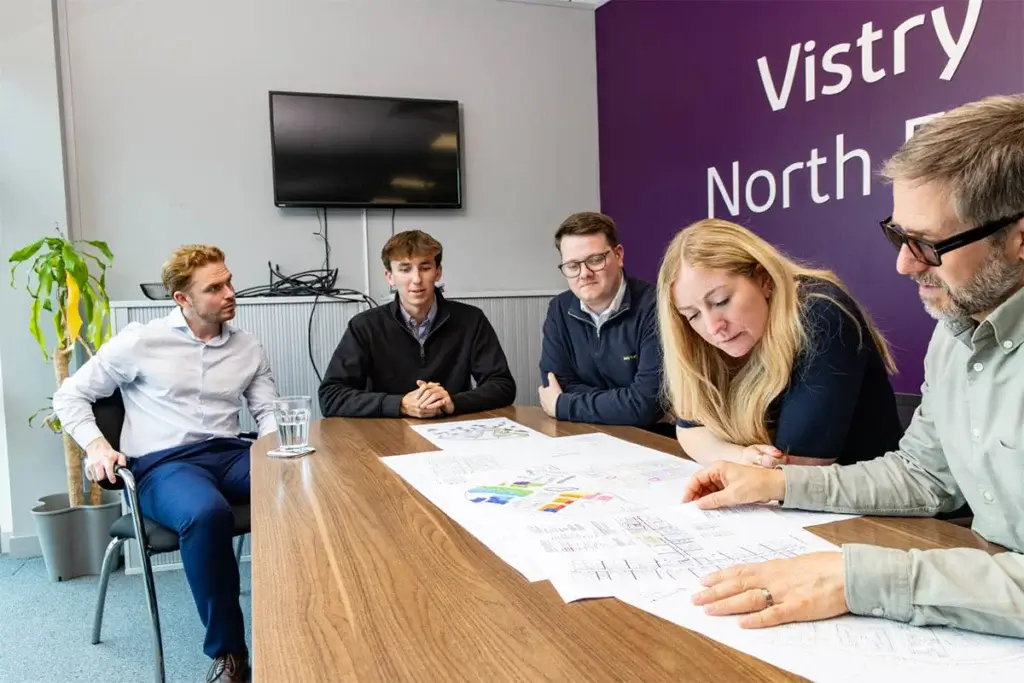
“On the organisational development side of things, it’s really about how we identify gaps in capability, culture or ways of working, and then I design initiatives to address those particular challenges.”
Dowling is taking a wider role in the industry, too: “I join the CITB and HBF steering groups. A big part of my role is how do we collaborate with other homebuilders when we are experiencing the same challenges.”
This is not a “one-man show” he underlines. “Vistry Group a large organisation of just over 4,000 people. We have a dedicated future talent team. Under me, I have three direct reports, however, they focus more on the programme delivery side of things. The way that we are structured is that someone focuses on programme delivery. We have a team admin who looks at things like the CITB claims, because again, a huge opportunity is that if you invest in graduates or training, particularly trainees with apprentices, you can get CITB funding back. There are lots of really great initiatives as well that we’re trying to monopolise on to almost become a social enterprise, if you will, that we reinvest that back into our talent. In the recruitment team, we have a future talent recruiter. Their specific role is to recruit early careers talent.
“Whilst you can say that a lot of the core programme design and delivery sits within my team, there is a variety of social value resource in our regions and they will also be responsible for local relationships with colleges and universities. Within our regions it’s also cascaded. I think one of the main reasons we’re so successful in this is because it’s not just isolated resource.”
There’s focus on working closely and developing long-standing partnerships and relationships with universities, colleges and training organisations, Dowling says.
“Every year, we’re really dedicated to increasing our numbers – last year we welcomed the mid-40s, this year we’re looking at welcoming the mid-80s. From the top of the organisation, there’s a real vision to make Vistry a pioneer in how we are supporting young people into the organisation. And as a result of that, if we’re going to have 10 people in Manchester, we need to ensure we’re engaging with Manchester universities and colleges.
“For me, relationships with colleges and universities are pivotal, not just as a recruitment tool, but also when it comes to development. The reason I say that is because we have worked with Barnsley College in the past. We send some of our trainees there at the moment and we use an ITP (independent training provider), T3 Training, for one of our commercial programmes. Last year for example, we identified a real need to upskill timber frame erectors. There was no programme that existed and it was chicken-and-egg in the sense of academics didn’t know how to teach it because they needed MMC from the employers. But the employers can’t provide a qualification. We saw an opportunity to say, why don’t we collaborate? You tell us what you need, we’ll tell you what we need. And now we’ve been shortlisted for three awards.
“I think my biggest message is that it really is down to both sides to understand what you want to gain from this partnership. It’s about understanding that as long as you’ve got the foundations of communication, effectiveness and a bit of a vision, those can be built upon. I think it’s on both the employer and on the provider to maintain and build that relationship.”
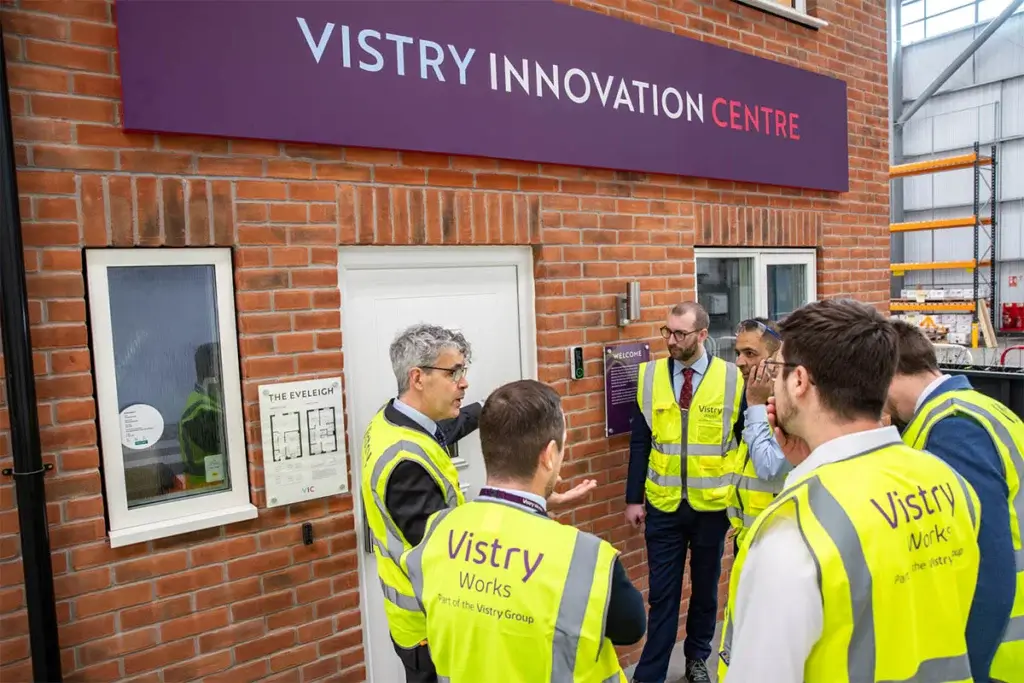
Dowling and his team are seeing more diversity in the industry, helped by “the continuous demystifying of what a career in construction can look like.”
He goes on: “We have our work experience programme, Destiny. This is absolutely amazing. We’ve won a Housebuilder Award for this because it dispels career myths in the industry. It breaks social mobility barriers of having to apply for work experience, pay to travel, because it’s all virtual. We get feedback at the end, and it’s a really rewarding part of my role reading the feedback.
“I’ve been at Vistry for three years and year-on-year, we’re seeing a huge increase in the level of talent applying and we’re also seeing quite a significant amount of career changes. I think you can easily look and say real estate graduates will naturally apply, but we also see people with languages apply, we see people with geography degrees apply. For me, that really shows that the industry is taking the right steps in increasing its access to a wide pool of candidates, and perhaps it’s because we’re changing their perception of what a career in construction can actually mean to them.”
Dowling is keen to illustrate the career potential of graduate training: “I think one of the most powerful points I can raise is our CEO, Adam Daniels, was a graduate himself. And to me, that sets such a wonderful tone to any graduate or trainee in the business when it comes to progression, promotion. Of course, not everyone can be the CEO. However, he’s a really great role model. And there are also a number of directors in the business who were graduates as well.
“Trainees have a really wide variety of support throughout their qualification. There’s a Vistry account manager and a mentor. When they join, we also provide them with a buddy and we have a really robust ‘keep warm’ strategy as well – which is essentially how we maintain engagement and build a psychological contract with our cohort between when they accept their offer, and when they officially join Vistry. So even before they join the organisation, they’re having site tours and attending the summer party. We really want to build the psychological relationship with them before they even join the organisation. And last year when we had our feedback from induction onwards, 100% of graduates and trainees said that their programme exceeded or met their expectations, which is really, really great feedback.
“In my team, we have what’s called a future talent committee, a quarterly meeting where representatives from the cohort meet with me and my team and they feed back on what’s good on their programme, what could be improved. We have monthly MI (management information) and meetings with all our providers to make sure that anything raised from a pastoral care perspective is also effectively addressed. We have a performance monitoring form and that’s for the rotational supervisors and line managers.
He provides an example: “I’ll use HR because that’s my background. Let’s say I rotated within HR. It could be that I go to comms, finance, HR business partnering and let’s say employee relations. In each of these four rotations, we identify a particular manager who’s going to be their dedicated point of contact. However, we also give them what’s called a line manager – almost their career manager throughout. We make sure that moving forward there is sign-off from the career manager and the rotational supervisor, and we’re all on board when it comes to their career trajectory because we want to make sure that they’re supported academically in their actual day-to-day job.
“We like to think that we’ve got a real wraparound pastoral care support model in place, which means whether you’re passionate about having a mentor for career development or equally, you just need someone to talk to, we give them a wide range of stakeholders they can talk to. So if they’re not comfortable maybe talking to me, they’ve still got six or seven other people that can assist them.
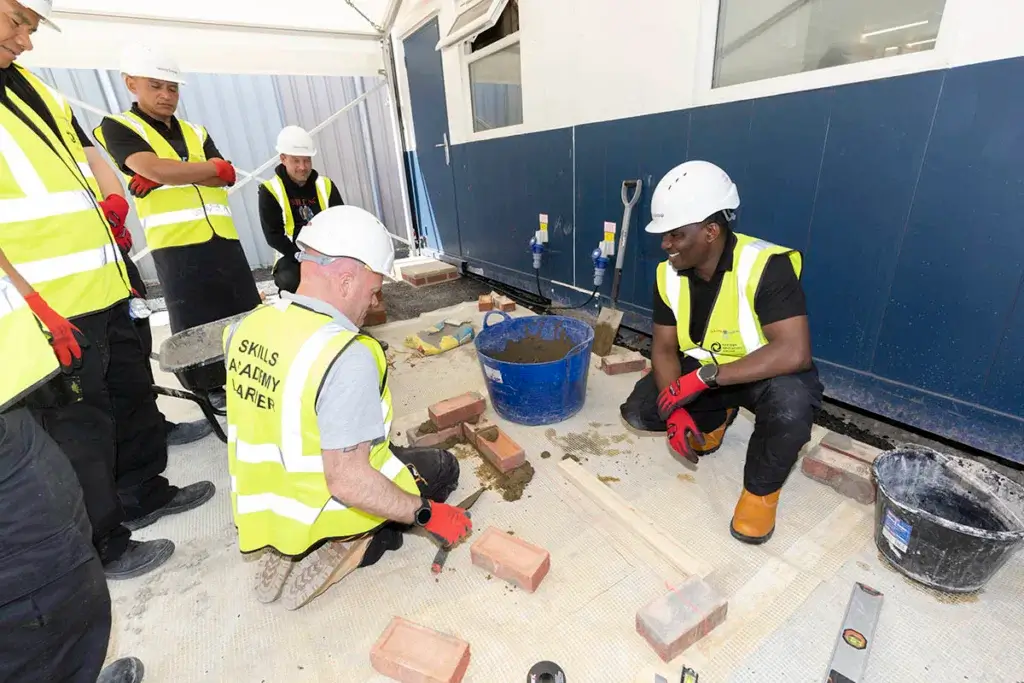
Dowling is proud of Vistry Group’s own in-house training facilities. “We have a really bespoke skills academy model. In 2017, we launched skills academies as part of our commitment to employment skills and community engagement. Led by our group social value team, they give on-site training through local training providers and they offer theoretical and practical learning experiences. The beauty of them is that they’re actually held on real-life sites as well. They also serve as educational resources for local community groups, such as schools and colleges. They have site visits during term time and also help massively with awareness of construction career paths that could be available.
“We’re really passionate about how Vistry differentiates itself through our skills academy model. What the regions do with their bespoke partnerships and social value are a core part of addressing that skills gap.
“I lead on future talent, so if universities or colleges are interested in partnering, or smaller and larger homebuilders, they can come to me to see what is possible.”