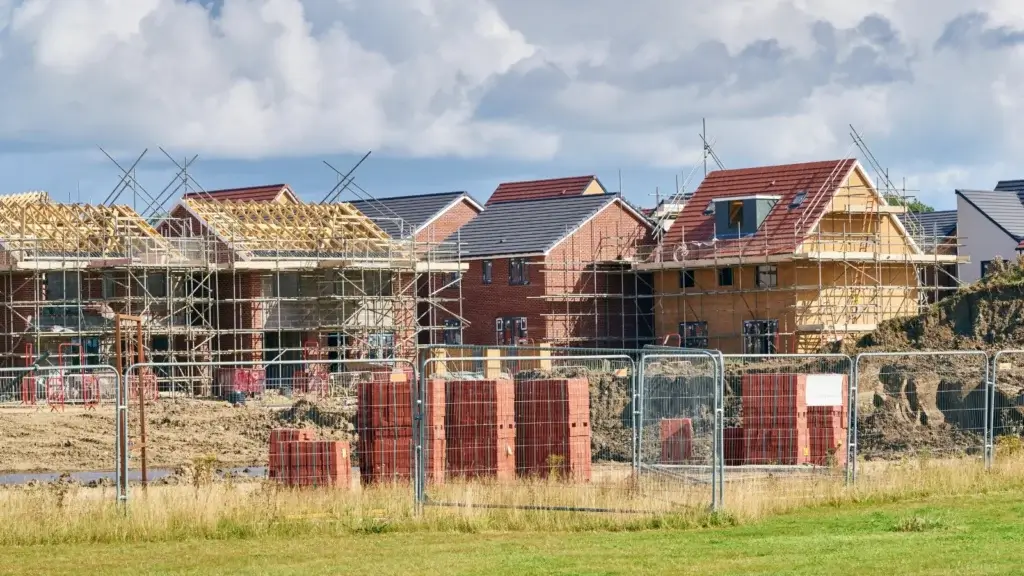
New data released by the Home Builders Federation has found that planning permissions for new homes fell by 17% in the second quarter of 2025, the lowest level since 2012.
Planning permission was granted for 44,520 new homes, a decrease of 17% from the same quarter last year and a 33% drop on the peak. It marks the lowest quarterly figure recorded since 2012 and, according to the HBF, provides another sign that weaknesses in the housing market and rising taxes on new homes continue to suppress investment in new housing sites.
The HBF’s latest Housing Pipeline report, based on data from Glenigan, shows that 1,410 sites were approved between April and June, marking the tenth successive quarter of decline. In total, 8,200 sites were granted permission in the 12 months to June, the lowest rolling outturn recorded since the data series began two decades ago, and fewer than half the number of sites that were granted permission during 2019.
The new figures show the significant challenge the government faces to achieve its housing targets, with a range of indicators all showing that housing supply levels are flatlining at best at around 200,000 homes a year, well short of the number needed to get to the much vaunted 1.5 million homes target for this parliament.
The HBF says that, while industry warmly welcomed changes to the planning system made immediately following the election, much more needs to be done if housebuilders dealing with new and rising taxes on new homes and persistently weak levels of effective demand in a housing market without any first-time buyer support for the first time in 60 years are to be able to increase output.
The Housing Pipeline report also shows the rolling annual number of homes given the green light in England stood at 221,900 in the year to June 2025, meaning that investment in new housing sites has fallen to the lowest 12-monthly rate in 12 years. To meet its pledge of delivering 1.5 million homes by 2029, an estimated 370,000 permissions per year are required, on average. However, current approval rates are at just 60% of that target.
At the same time, the number of housing projects granted approval in the last year has dropped to 8,218. This is the lowest yearly total since the Housing Pipeline Report began in 2006 and is barely more than a third of sites approved annually in the latter half of the 2010s, when investment in new housing supply was at its peak.
Neil Jefferson, chief executive at the Home Builders Federation, said: “Today’s figures reflect the true state of play for the home building industry. Mounting pressures are limiting viability as rising regulatory costs and taxes are being compounded by delays in processing planning applications, making it increasingly challenging to operate, particularly for the nation’s smaller builders. Meanwhile, a lack of affordable mortgage lending is suppressing demand for new homes, particularly amongst young people. Without any government support for first-time buyers for the first time in decades, the potential market for new homes is being limited.”
“This research highlights the fragility of the housing pipeline and a continued downward trajectory that shows little sign of changing soon. Without meaningful action to tackle constraints on housing delivery, the early confidence that industry placed in the Government will undoubtedly begin to wane.”
“What’s needed now is decisive action to tackle broader market constraints. Ministers need to look beyond tweaks to the planning system and take a proper look at the market fundamentals that ultimately determine how many homes can be built.”
“Investment in new homes depends on the building of those homes being economically viable and for there to be a realistic chance of selling new homes. Loading more and more taxes on home building is working against the overarching objectives of the government to build more homes.”